














.svg)
.svg)

.svg)

.svg)
.png?width=512&height=512&name=guru%20(1).png)
.svg)


.png?width=199&height=109&name=salesforce-logo1-removebg-preview%20(1).png)





.svg)

.svg)
.svg)


.webp?width=716&height=569&name=banner-img%20(1).webp)


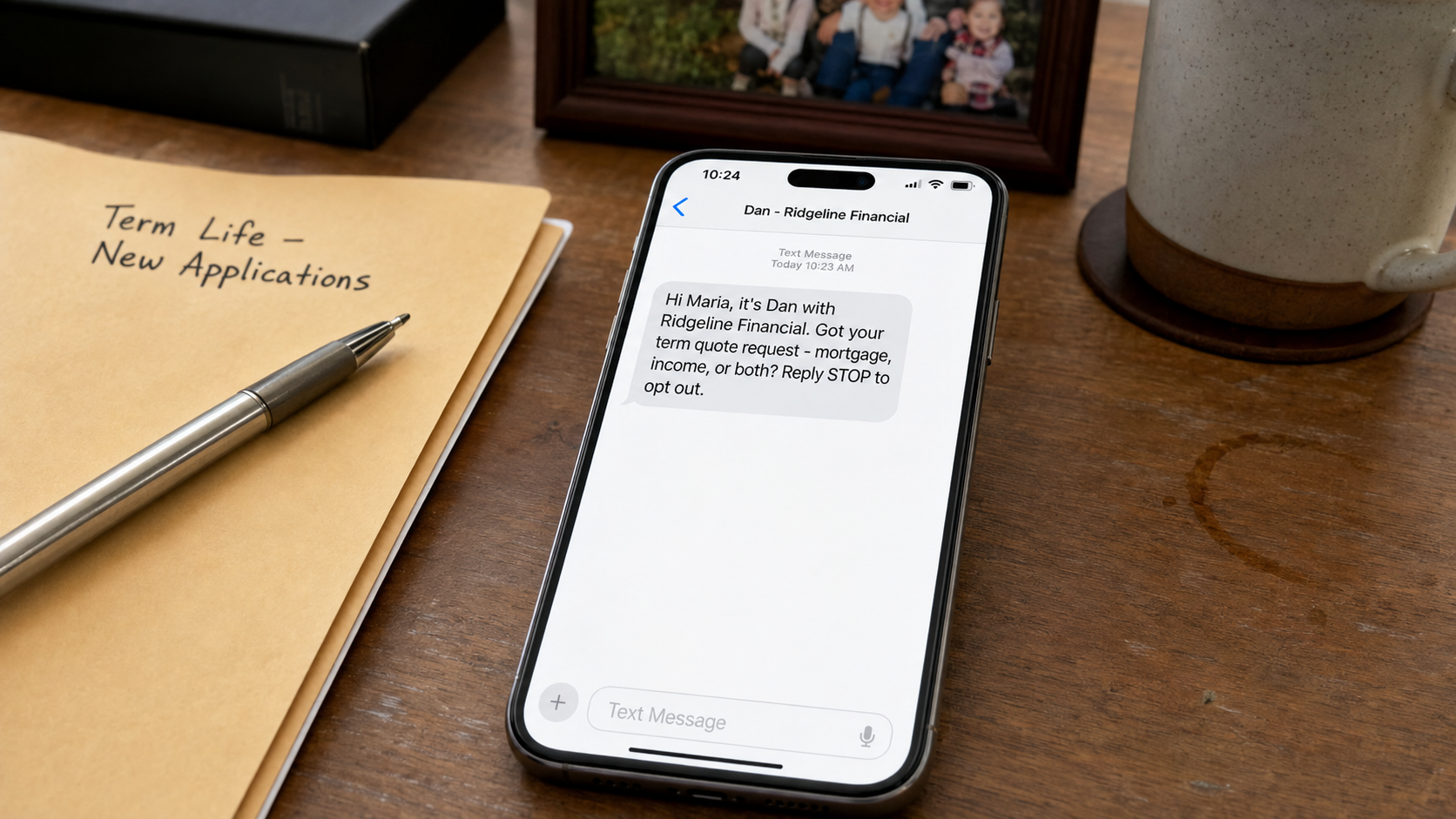
Search for life insurance SMS marketing and almost everything you find was written for a property and casualty book: renewal reminders, x-dates, claims updates. Fine advice if you sell auto and home. Close to useless if you sell life.
Life runs on a different clock. Leads decay in minutes because the same consumer submitted their information to three other quote engines. Underwriting takes weeks. Policies last decades, and they lapse quietly.
Life insurance SMS marketing is the use of two-way text messaging to engage leads within seconds of a quote request, guide applicants through the weeks of underwriting, and keep placed policies on the books. It spans the full lifecycle, from first contact through policy delivery, persistency, and the revival of aged leads.
If you sell across multiple lines, start with our insurance playbook. This guide covers the stages only life has.
Why Texting Fits Life Insurance
Three things make life a natural fit for a conversational text channel.
Speed decides who gets the conversation. Life shoppers rarely fill out one form. They fill out four and wait to see who reaches them first. Research published in Harvard Business Review by James Oldroyd, Kristina McElheran and David Elkington, based on an audit of 2,241 US companies, found that firms making contact within an hour were nearly seven times more likely to qualify a lead than those that waited an hour longer, and more than 60 times more likely than those that waited a day. Among companies that responded at all, the average first response took 42 hours.
The purchase is emotional and considered. Nobody buys a death benefit on the first call. Text gives the prospect a low-pressure channel they control, which is exactly what a hesitant buyer needs.
Demand is not the constraint. LIMRA reports that roughly half of US adults own life insurance and more than 100 million say they have a coverage gap. The people in your CRM already told you they wanted coverage. Reaching them is the hard part.
One caveat before the playbook: broadcast texting will not do this job. Every stage below depends on a reply arriving and someone answering it.
The Life Insurance Texting Playbook, Stage by Stage
1. New lead response: win the first five minutes
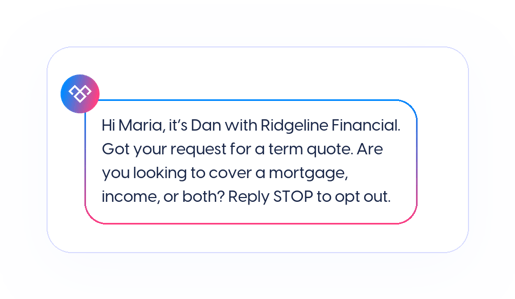
The first message should leave before a human touches the record. Send it the moment the lead arrives, identify the agency by name, reference what they requested, and ask one qualifying question rather than four. Age, state, coverage amount and tobacco use are enough to route the lead and price it honestly, and they come out naturally over a few exchanges.
This is where Meera acts like an AI insurance agent and does the work most teams cannot staff for. It texts every new lead within 15 seconds of opt-in, holds the qualifying conversation, and books the agent call. In lending, a comparable setup at Level Financing produced a 43% response rate on first outreach, 56% qualified, and 97% of those qualified booking a call.
For more on where qualification fits, see our lead qualification explainer.
2. Quote follow-up and appointment booking
Deliver the number, then move to the call. Life pricing has too many variables to settle over text, and the agent conversation is where placement happens.
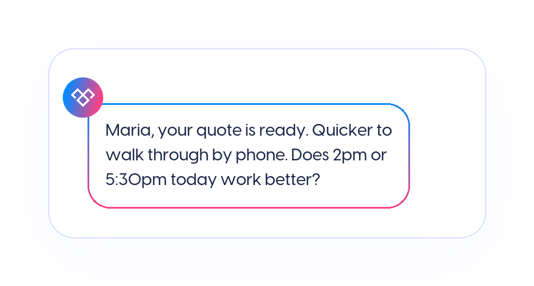
Offer two times. Open-ended questions like “when works for you?” create a second round of back and forth and a lot of silence. A pair of concrete options gets a one-word answer.
Reminders and rescheduling belong here too, which our appointment reminders guide covers in depth.
3. Application completion
A started application that never gets submitted is paid acquisition evaporating. The lead already gave you their time, their information, and their intent.
Nudge within 24 hours, and make finishing frictionless by sending the link directly instead of asking them to find an email. Two or three attempts over a week is reasonable. One is not.
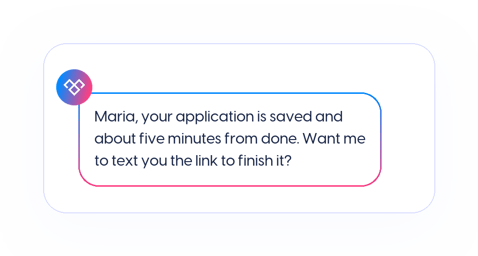
Maria, your application is saved and about five minutes from done. Want me to text you the link to finish it?
4. The underwriting weeks
This is the drop-off zone nobody texts through. Weeks of silence while a file sits with underwriting is where applicants cool off, take a competing offer, or forget they applied.
Three touches carry this stage: scheduling the paramed exam, reminding them the day before, and sending plain-language status updates so silence never means abandonment. Keep every one of them procedural. Health details, exam results and underwriting decisions stay off SMS entirely.
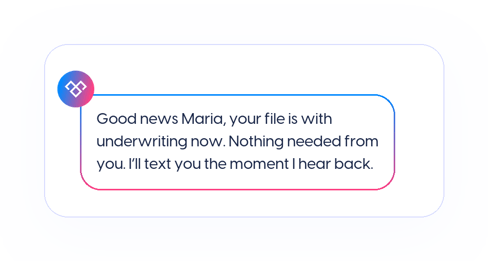
5. Policy delivery and onboarding
Placement is not the finish line. Delivery requirements, signatures and the first premium all sit between an approved policy and a paid one.
Confirm each step over text, then set expectations for how you will communicate going forward. A policyholder who has your number saved is dramatically easier to reach in year two.
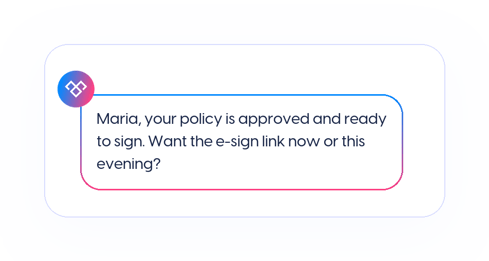
6. Persistency and lapse prevention
Life has no annual renewal cycle, so persistency is where the equivalent revenue leak lives. A lapsed policy in month 13 costs the commission, the chargeback and the client.
Text the payment reminders. Text the failed-payment notice the day it happens rather than the week it happens. Grace-period messages are the highest-value texts in the entire lifecycle, and they are almost always sent too late.
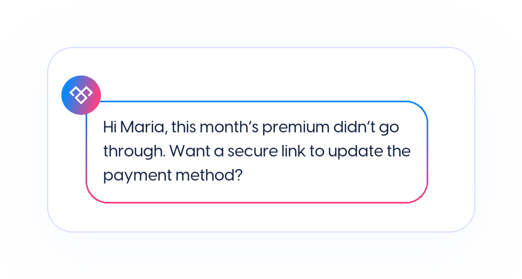
Hi Maria, this month’s premium didn’t go through. Want a secure link to update the payment method?
7. Milestones, reviews, and conversion windows
Coverage needs change on a schedule you can partly predict. New baby, home purchase, marriage, a term policy approaching its conversion deadline, a rate band that shifts at a birthday.
Treat these as information, not pressure. A conversion deadline is a fact with a date attached, and stating it plainly outperforms anything that sounds like a countdown clock.
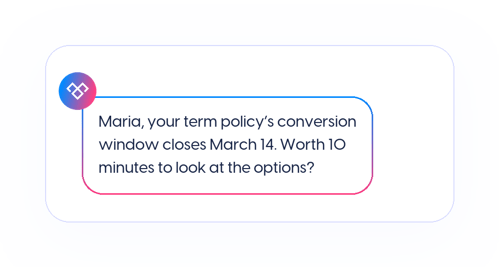
8. Aged lead re-engagement
This is the life-specific goldmine. Purchased leads from six months or two years ago sit in every agency CRM, already paid for, already self-identified as interested, and untouched because reps are busy with today’s new leads.
Check consent before anything else. Then open with a specific reference to what they were looking at, not a generic check-in. This is also the second place Meera earns its keep, because working a file of 40,000 aged leads conversationally is not something a team of five can do by hand. Compass Insurance ran an aged renewal list through Meera and saw 57% of contacts consent to start the process.
Our guide to recovering leads goes deeper on sequencing.
Life Insurance Text Message Templates
Copy, adapt, and swap the placeholders. Keep each under 160 characters where you can, and include opt-out language in the first message of any marketing campaign.
New lead
1. Hi {first_name}, it’s {agent} with {agency}. Got your request for a life quote. Term or whole life? Reply STOP to opt out.
2. Hi {first_name}, {agent} at {agency} about the coverage you requested. Quick one so I price it right: what state are you in?
Quote and booking
3. {first_name}, your quote is ready. Easier by phone. Does 2pm or 5pm today work better?
4. Hi {first_name}, want me to hold the rate we discussed? Reply YES and I’ll send two times.
Application
5. {first_name}, your application is saved and about five minutes from done. Want the link to finish it?
Underwriting
6. Hi {first_name}, time to schedule your exam. Mornings or afternoons better this week?
7. {first_name}, your file is with underwriting. Nothing needed from you. I’ll update you as soon as I hear.
Delivery
8. Welcome aboard, {first_name}. I’ll text you here for anything policy related. Save my number and reply anytime.
Persistency
9. Hi {first_name}, this month’s premium didn’t go through. Want a secure link to update payment?
Aged lead
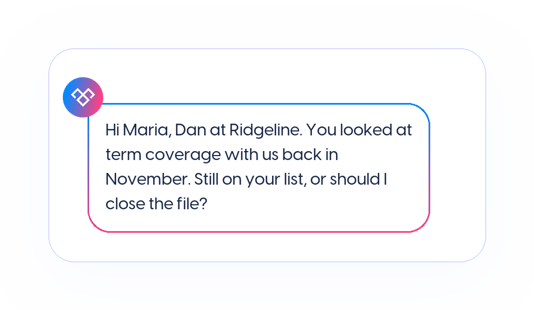
10. Hi {first_name}, {agent} at {agency}. You looked at coverage with us in {month}. Still on your list, or should I close the file?
For a broader set across other lines, see our insurance templates library.
Compliance for Life Insurance Texting
None of this is legal advice, and your compliance team should review any program before it goes live. That said, five requirements sit under every life texting program.
Consent. Marketing texts require express written consent under the TCPA. Purchased lead consent is only as good as the form it came from, so review the disclosure language on every source you buy.
10DLC registration. Carriers require registered brands and campaigns for application-to-person messaging. Unregistered traffic gets filtered before anyone reads it.
Opt-outs. FCC rules effective April 11, 2025 require honoring common opt-out keywords and processing revocation and do-not-call requests within a reasonable period not exceeding 10 business days. The broader “revoke-all” provision, which would apply one opt-out to all future calls and texts from a sender on unrelated matters, has been delayed again. In a January 6, 2026 order the FCC extended that effective date to January 31, 2027, so verify current status before you build to it.
Quiet hours. Federal rules set the outer window and several states are stricter. Route by the contact’s state or ZIP rather than area code, because phone numbers travel and area codes lie.
Life-specific limits. Health information, exam results and underwriting details stay off SMS. Marketing language also has to clear carrier advertising standards and state DOI rules, so keep templates in the same review cycle as your other agency creative. Our compliance control page covers how this gets enforced at the platform level, and scaling insurance SMS covers compliance at volume.
Automating It: From Reminders to AI Conversations
There is a ladder here, and most agencies stop on the first rung.
Rung one: scheduled reminders. Exam dates, premium due dates, appointment confirmations. Easy to set up, and it handles maybe 20% of the lifecycle.
Rung two: CRM-triggered workflows. Messages fire on events, like an abandoned application or a failed payment. Better, though still one-directional. When a lead replies with a real question, a human has to catch it.
Rung three: conversational AI. This is where a platform engages every lead within seconds, asks and answers questions in both directions, qualifies against your criteria, books the call, and transfers to an agent when someone signals they are ready. Voice becomes the escalation, not the opening move.
That third rung is what Meera was built for, and it is the only rung that makes the aged-lead file workable at any real volume. For the mechanics, see program setup and automated replies.
Mistakes Life Agents Make With SMS
Importing the P&C playbook is the big one. There is no annual renewal to hang a calendar on, so a program built around renewal dates will run out of things to say by month two.
Fear-based copy is the second. Life marketing lives or dies on tone, carriers review it, and a message that reads as a scare tactic loses the applicant and the compliance approval.
The rest are quieter. Blasting an aged file without checking consent. Putting health or exam details in a text. Quitting after one attempt when the whole thesis is persistence across a months-long lifecycle. And measuring sends when the only number that matters is conversations started. If your leads are going unqualified for other reasons, our unqualified leads post covers the diagnosis.
FAQs
Can life insurance agents text leads?
Yes, with express written consent for marketing messages, a registered 10DLC campaign, and a working opt-out process.
What should a life insurance text message say?
Identify yourself and the agency, reference what the prospect requested, ask one question, and give an easy way out. Keep it under 160 characters.
Is SMS marketing legal for insurance agents?
It is, under the TCPA and FCC rules, provided you have documented consent and honor revocations within the required window. State insurance advertising rules apply on top of that.
How fast should you follow up with a life insurance lead?
Within seconds if you can, and within five minutes at the outside. HBR’s audit found response inside the first hour made firms nearly seven times more likely to qualify the lead.
Does texting work for aged life insurance leads?
Yes, and aged files often outperform expectations because the contacts already self-identified as interested. Verify consent first, then open with a specific reference to what they were originally looking at.
Templates are the easy part. The follow-through is the conversation.
See how it works with one of your own leads. Book a demo and watch a real life insurance lead move from quote request to booked agent call.
About the Author
