








.svg)
.svg)

.svg)

.svg)
.png?width=512&height=512&name=guru%20(1).png)
.svg)


.png?width=199&height=109&name=salesforce-logo1-removebg-preview%20(1).png)



.svg)

.svg)
.svg)


.webp?width=716&height=569&name=banner-img%20(1).webp)


How to Recover Lost Leads with AI Automation

Most leads in your CRM didn’t go silent because they lost interest. They went cold because someone didn’t follow up fast enough, or when they did, it was the wrong channel at the wrong time.
That’s a pipeline problem with a known cause, and a fixable one. According to the original study by Dr. James Oldroyd at MIT and InsideSales.com, companies contacting leads within five minutes are 21 times more likely to qualify them than those who wait 30 minutes. Yet the average first response time across industries sits closer to 47 hours.
The gap between those two numbers is where most “lost” leads actually live. They’re not gone. They’re just waiting for someone to reach them in a way that actually works, and that’s exactly what AI automation is built to do at scale.
What Is a Lost Lead (and Which Ones Are Worth Recovering)?
A lost lead is a prospect who showed intent (filled out a form, requested a quote, attended a webinar, clicked an ad) but didn’t convert, and has since gone quiet. In most CRMs, they end up in a limbo status: not closed-lost, not active, just aging.
Before running any recovery effort, it helps to sort them into three categories:
- Genuinely disqualified: Budget never existed, wrong geography, or the need was one-time. These aren’t worth re-engaging.
- Cold from poor follow-up: They were interested but got slow, email-only outreach they didn’t respond to. High recovery potential.
- Good timing, wrong moment: Life happened. A home buyer paused their search, a borrower waited on a raise, a student deferred enrollment. Circumstances change, and these leads are often your best re-engagement targets.
The practical question is how to tell them apart without a rep manually reviewing thousands of records. That’s where an automated re-qualification step becomes essential, not just a nice-to-have.
Note: if your concern is leads who were never a fit to begin with, the playbook is different. See our guide on unqualified leads for that side of the equation.
Why Leads Go Cold in the First Place
Understanding the failure point determines the recovery strategy. Leads go cold for a few consistent reasons:
Slow speed-to-lead. Intent decays fast. A prospect who submits a mortgage inquiry on a Tuesday afternoon has moved on by Thursday morning. Meera’s speed-to-lead guide covers the research in detail, but the short version is that every 30-minute delay cuts your odds of qualifying that lead by more than half.
For example, LifeWest Chiropractic College was averaging more than 10 minutes to first contact before deploying Meera. After switching, their speed-to-lead dropped to near real-time, and they achieved a 95.6% average conversion rate across re-engagement campaigns.
Email-only outreach. Text messages carry a 98% open rate; email averages closer to 20%. When re-engagement runs through email alone, most of those attempts are invisible to the recipient. Meera’s internal research shows that the very first text message earns the highest response rate.
Wrong timing. A lead who wasn’t ready three months ago may be ready now. Circumstances shift. Without a system that re-engages based on triggers or elapsed time, those leads sit permanently dormant.
No re-engagement system. Most teams rely on reps to manually run re-engagement cadences. When pipeline pressure builds, cold leads get deprioritized. The ones who “might come back” never get touched.
Each of these failure points has a corresponding fix. The issue is that the fixes tend to fall apart when they depend on individual reps to remember and execute them consistently.
How to Recover Lost Leads with AI Automation
The core shift with AI-driven recovery is taking the burden off reps and putting it on automated, trigger-based systems that run in the background. Here’s how that plays out across four functions:
Re-engage Instantly and Conversationally
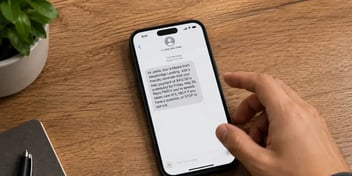
The channel matters more than most teams realize. Sending a re-engagement email to a cold lead produces a predictable result: it gets ignored. Sending a conversational text that opens with a relevant, human-sounding question produces a different one.
That distinction matters. Broadcast messages tell the recipient they’re one of thousands. Conversational outreach tells them someone remembered their situation. The response rate difference reflects that.
Re-qualify as Circumstances Change
One of the most underused functions of re-engagement is finding out whether the lead’s situation has changed. A prospect who filled out a home services quote six months ago may have bought elsewhere, or they may have just gotten a new quote and found the pricing too high.
The same dynamic plays out in higher education: Academy of Art University was reinstating only 0.47% of canceled applications before deploying Meera. After using conversational SMS to re-engage those canceled applicants, their reinstatement rate rose to 0.72%, a 54% improvement, without additional headcount.
AI-powered conversations can surface that context in the first exchange. Instead of pushing for a call immediately, the system asks a qualifying question that reveals where the lead stands today.
This is what separates genuine re-qualification from a simple reminder sequence. A reminder says “we’re still here.” A qualifying conversation finds out whether “still here” is useful information.
Trigger-Based and Time-Based Outreach
Not all re-engagement should start from a manual review of aged leads. The most effective setups build re-engagement triggers into the lead’s own journey:
- A lead goes 30 days without a meaningful touchpoint: automated re-engagement fires.
- A prospect who requested a quote but never responded reaches a 14-day threshold: a follow-up conversation starts.
- A lead who previously said “not yet, maybe in a few months” hits that window in the CRM: outreach re-opens automatically.
This is what a re-engagement system actually means in practice: not a cadence a rep has to remember to run, but a set of rules that execute without anyone managing them.
Route the Warm Ones
Recovery isn’t the endpoint. It’s the filter. When a cold lead re-engages and shows readiness, the conversation needs to move to a human quickly. The longer a warm lead waits in an automated loop after showing intent, the more likely they are to go cold again.
Meera handles this with warm call transfer: when a re-engaged lead confirms interest or requests to speak with someone, the system routes them to an available rep in real time. The rep picks up a conversation that’s already been qualified. The friction of a cold introduction is gone.
Leads that don’t re-engage, or respond but aren’t ready yet, stay in an ongoing nurture state, getting periodic outreach without any rep time invested.
Recovering Lost Leads the Right Way: What to Look For
If you’re evaluating a tool or system for lost lead recovery, a few things separate tools that actually move the needle from ones that create busy work:
- CRM sync and segmentation: The system should read lead status from your existing CRM and segment accordingly. Re-engagement sent to unqualified leads wastes everyone’s time.
- Multichannel capability: SMS should be the primary channel. Voice should be available for escalation when a lead is warm enough to take a call. Email-only tools don’t have enough reach to make recovery viable at scale.
- Conversational, not robotic: Templates and drip sequences have a ceiling. Two-way conversation, where the system can handle a reply, answer a basic question, or adjust based on what the lead says, produces better qualification data and higher conversion rates.
- Compliant outreach: Re-engaging old leads requires attention to consent and messaging regulations. The system should manage opt-outs, honor do-not-contact flags, and comply with relevant guidelines including TCPA requirements.
- Re-engagement at scale: The whole point is removing the bottleneck of rep capacity. If the system still requires manual review for each re-engagement, it hasn’t solved the underlying problem.
Recovering Lost Leads with Meera
Here’s a concrete example of how this works in practice.
Level Financing, a personal lending company managing a consistent flow of inbound digital leads, faced a familiar problem: manual outreach couldn’t keep pace with new opt-ins, and the window to reach a lead at peak interest was closing before reps could pick up the phone.
With Meera, Level Financing began contacting new leads within 15 seconds of opt-in. Meera opened a two-way SMS conversation, explained the loan process, answered basic questions, and moved high-intent leads toward a scheduled call with the sales team.
The results: 43% of contacted leads responded to Meera’s initial outreach, 56% of those went on to become qualified leads, and 97% of qualified leads booked a call with the Level Financing team.
When a lead signaled readiness, Meera transferred them directly to an available loan officer with full context already passed. For a detailed breakdown of how that handoff works, including real-time routing across verticals, see our post on AI call transfers.
Frequently Asked Questions
What is a lost lead?
A lost lead is a prospect who showed genuine buying intent but didn’t convert and has since gone unresponsive. In most cases they went cold due to slow follow-up or poor channel choice, not because they lost interest.
Can you recover lost leads?
Yes, but channel and timing determine whether recovery works. SMS-based re-engagement consistently outperforms email because texts get opened; leads contacted through triggered, behavior-based outreach convert at higher rates than those hit with bulk blasts.
How do you re-engage cold leads?
Start with SMS, which reaches leads where email doesn’t. Open with a qualifying question specific to where they left off, not a generic check-in. Then automate the cadence so re-engagement runs consistently, regardless of rep bandwidth.
What’s the difference between a lost lead and an unqualified lead?
A lost lead was a fit but didn’t convert. An unqualified lead was never the right fit to begin with. The recovery strategy differs: lost leads need re-engagement and re-qualification; unqualified leads need a different kind of nurture or should exit the funnel. See our guide on unqualified leads for that side of the equation.
Can AI automation recover lost leads?
Yes, and it solves the two barriers manual recovery can’t: scale and consistency. AI handles initial outreach, manages replies, re-qualifies based on what the lead says, and routes warm leads to sales without rep involvement until the lead is ready to talk.
The Pipeline You Already Have
Most teams treat lost leads as a write-off. The cost of acquiring them has already been paid, but recovery feels like too much work to justify, especially when reps are focused on active pipeline.
AI automation changes that calculus. When re-engagement runs automatically, at scale, through the right channel, with the right conversation design, cold leads start converting without additional marketing spend or headcount.
The leads are already in your CRM. Conversational AI SMS tools like Meera give you a way to work them.
If you want to see how this works before committing to a full implementation, Meera offers a proof of concept aged leads campaign designed to be up and running without dev work or a lengthy onboarding process.
You upload a file export of your aged contacts or connect your CRM, and Meera handles the re-engagement from there. It's a practical way to put a real number on what your dormant database is actually worth. Learn more about lead re-engagement campaigns here.
About the Author

Grant Weherley