













.svg)
.svg)

.svg)

.svg)
.png?width=512&height=512&name=guru%20(1).png)
.svg)


.png?width=199&height=109&name=salesforce-logo1-removebg-preview%20(1).png)



.svg)

.svg)
.svg)


.webp?width=716&height=569&name=banner-img%20(1).webp)


Live Call Transfer: What It Is and How to Do It Right (Without Losing the Lead)
It sounds simple, and that is exactly why so many teams underestimate it. Across hundreds of client implementations, our team at Meera team has seen the same pattern play out again and again: a qualified lead is on the phone, genuinely ready to talk, and then the handoff happens. The call rings out. The receiving agent has no idea who this is. The lead repeats their story for the third time and starts to cool off. That short window is where deals quietly die.
This guide covers what a live call transfer actually is, the two ways to do one (blind and warm), why most transfers fail, and the best practices that turn a handoff into a closed deal. Toward the end, we will look at how conversational AI texting removes the two hardest parts of doing this well.
What Is a Live Call Transfer?
A live call transfer is the act of handing off an in-progress phone call to another agent, department, or system without dropping the caller. The connection stays open the whole time, so the person never has to hang up and dial again or wait for a callback.
You will see the same idea described under several names. Warm transfer, live connect, and real-time transfer are often used interchangeably with "live call transfer," though they carry slightly different shades of meaning.
A warm transfer specifically implies that the receiving party gets an introduction first, while "live transfer" can refer to any real-time handoff, introduction or not. We will untangle that distinction in the next section, because it matters more than most people think.
Live call transfers show up across very different settings. In inbound support, a frontline rep routes a caller to the right department once they understand the issue. In sales, a qualifier or SDR confirms a prospect is a fit and connects them to the closer who can actually move the deal forward.
In high-volume contact centers and lead-generation call centers, agents qualify prospects and transfer the live call to a buyer or closer who paid for that warm connection. In every case the goal is the same: keep the momentum of a real-time conversation instead of starting a new one from scratch.
Blind Transfer vs. Attended (Warm) Transfer
There are two ways to execute a live call transfer, and the difference between them is usually the difference between a closed deal and a lost lead.
A blind transfer (sometimes called a cold transfer) connects the caller to the destination immediately, with no introduction. The first agent presses a button, the call routes through, and they drop off before the second agent picks up. It is fast, but it is a gamble. The receiving agent inherits the call with zero context, the caller often has to re-explain everything, and nobody confirmed the destination was even available.
An attended transfer, more commonly called a warm transfer, adds one crucial step. Before connecting the caller, the first agent speaks privately with the receiving party, passes along the lead's name and context, and confirms they are ready to take the call. Only then does the caller get connected, often in a quick three-way moment where the first agent introduces them by name. It takes a few extra seconds, and those seconds are why warm transfers convert at a much higher rate.
Here is the practical comparison:
| Blind Transfer |
Attended (Warm) Transfer | |
| Introduction | None, caller connected immediately | Agent briefs the receiving party first |
| Speed | Faster | Slightly slower |
| Context passed | No | Yes |
| Conversion impact | Higher drop-off risk | Higher close rate |
| Best for | Simple routing to a known destination | Sales handoffs and high-value leads |
The shorthand: blind transfers are fine when you are routing a caller to a known destination for a simple reason ("press 2 for billing"). For anything where the relationship matters, especially a sales handoff or a high-value lead, a warm transfer is the right call.
Why Live Call Transfers Fail (The Handoff Gap)
There is a brief window, usually three to ten seconds, where a caller silently decides whether they are being helped or being passed around. That window is the handoff gap, and almost every failed transfer fails inside it. When teams lose leads at the handoff, it usually traces back to one of four causes.
The lead was not actually qualified. The closer inherits a prospect who has the wrong budget, the wrong timeline, or no real intent. The conversation that follows is a waste of two people's time, and the rep learns to dread transfers.
No agent was available. This is the silent killer. The transfer routes to a phone that rings out, or the caller gets parked on hold and hangs up. A transfer into an empty seat is worse than no transfer at all, because you have taken a warm, engaged lead and handed them a dead end.
No context was passed. The receiving agent picks up cold and starts re-asking questions the lead already answered. The lead repeats themselves, wonders why they bothered, and loses trust in the company before the real conversation even begins.
It felt like a sale. A cold, abrupt handoff reads as being shuffled toward a pitch. The moment a caller senses they are being "sold to" rather than helped, they disengage, even if the offer is genuinely good for them.
Notice that three of these four failures have nothing to do with the transfer mechanics. They are about readiness, availability, and context. You can have a flawless phone system and still lose the lead if the person on the other end was not ready or the seat you transferred into was empty.
Best Practices for a Live Call Transfer That Converts
A transfer that converts comes down to preparing the lead, preparing the agent, and connecting them at the right moment. These five practices cover all three.
- Qualify before you transfer. Confirm intent, fit, and readiness before the handoff. A clean transfer of an unqualified lead is still a wasted transfer. Speed matters here too: research from Harvard Business Review on online sales leads found that companies which responded within an hour were far more likely to have a meaningful conversation with a decision-maker than those that waited even slightly longer. The lead's readiness has a short shelf life, which is why speed-to-lead is so closely tied to conversion.
- Always do a warm introduction. Hand the receiving agent the lead's name and a one-line summary of why they are calling, ideally with a quick three-way introduction so the caller hears that they are expected. This single step removes the "who is this and what do you want" friction that kills cold transfers.
- Confirm the agent is available in real time. Do not transfer into a void. Before you connect the caller, know that someone is genuinely free to pick up. Routing to whoever is actually available, rather than to a single busy line, is what keeps the handoff from ringing out.
- Sync the data. The receiving agent should see the lead's details the instant the call connects, not have to look them up mid-conversation. When the context travels with the call, the closer can pick up exactly where the qualifier left off.
- Keep it compliant. Phone and text outreach to consumers is governed by rules like the Telephone Consumer Protection Act. The short version: get documented prior express consent before you contact a lead, honor opt-outs, and keep records. For the authoritative details, the FCC's TCPA resources and the FTC are the places to check rather than relying on a vendor's summary.
Most of these come down to a single principle: a live call transfer only works if the lead is actually ready and the receiving agent is actually available. Get those two things right and the mechanics take care of themselves. Miss either one and no transfer technique will save the call.
How AI Texting Makes the Warm Transfer Effortless
The two hardest parts of a great transfer are exactly the two that break most often: qualifying the lead before you connect them, and catching an agent who is genuinely free at the moment the lead is ready. Doing both, consistently, at volume, by hand is where teams fall apart. This is the part conversational AI texting was built to solve, and it is what Meera does.
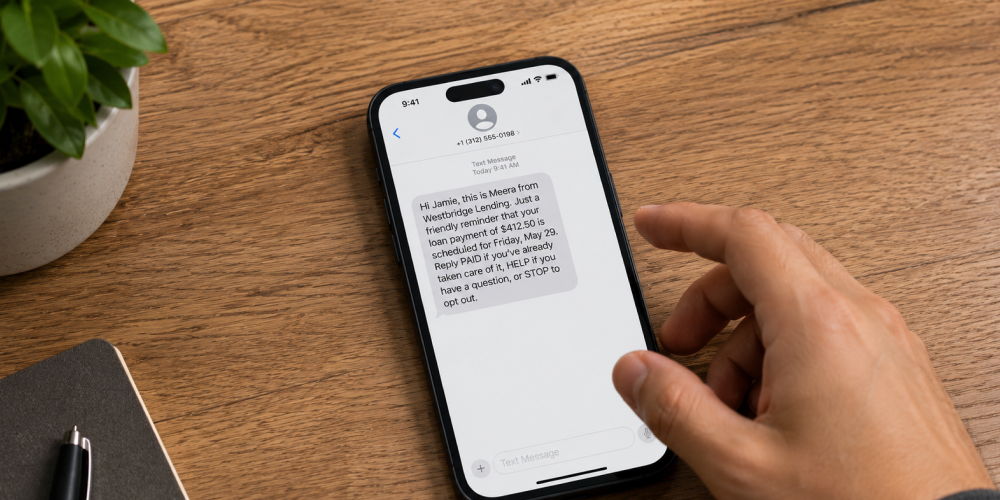
Meera engages each lead over SMS first, which is the channel leads actually reply to. Instead of dialing a list and hoping someone picks up, Meera starts a real back-and-forth, one question at a time, and qualifies intent and fit as the conversation goes. By the time a transfer happens, the lead has already had a genuine exchange and is expecting the call. The handoff is the next step in a conversation, not a cold ambush.
Availability is handled the same way. Meera syncs with your CRM and your agents' calendars (the same engine behind its appointment scheduling) so it knows who is actually free, and it can dial all available agents at once so the call never rings into an empty seat.
The lead's details travel with the connection, so the agent who picks up already knows the name, the context, and the reason for the call. That is a warm transfer executed automatically, every time, without a rep babysitting the queue.
And when no one is free, Meera does something a manual process cannot: it keeps the lead warm over text and reschedules, rather than burning the moment on a failed transfer. The lead never hits a dead end, and the team never loses the conversation.
This is a real pain point for B2C companies with a consultative sales process. In insurance, for example, agencies routinely buy live-transfer leads at premium prices and find that many of them are poorly qualified or unreachable.
One agency owner told our team they paid around seventy dollars per live-transfer call, only to find the calls were frequently low quality, while another bought fifty leads and spoke to no one at all, since nobody answered the phone, the texts, or the emails. The problem in both cases was not the transfer mechanism. It was that the leads were never warmed or qualified first, and there was no reliable way to connect them while they were still engaged. Warming the lead over text before any handoff fixes the part that was actually broken.
If your team relies on live transfers and you want them to actually convert, this is the model worth adopting. You can see how it works on Meera's Warm Call Transfer and Voice AI pages.
Frequently asked questions about live transfers
What is the difference between a live transfer and a warm transfer?
A warm transfer is a type of live transfer. "Live transfer" means any real-time handoff of an active call, while "warm transfer" specifically means the receiving agent gets an introduction and context before the caller is connected. All warm transfers are live transfers, but not all live transfers are warm.
What is a blind transfer?
A blind transfer (or cold transfer) connects the caller to the destination immediately, with no introduction and no context passed to the receiving agent. It is fast and works well for simple routing, but it carries a higher risk of the lead dropping off because the receiving party is unprepared and may not even be available.
Are live call transfers TCPA compliant?
They can be, as long as you have documented prior express consent to contact the lead, you honor opt-out requests, and you keep proper records. Compliance depends on how you obtained and stored consent rather than on the transfer itself. Check current FCC and FTC guidance for the specifics, and treat any vendor's claims as a starting point, not legal advice.
How do you transfer a call without losing the customer?
Qualify the lead before the handoff, give the receiving agent a warm introduction with the lead's name and context, confirm someone is actually available to take the call, and make sure the lead's data is visible the moment the call connects. The two failures to avoid are transferring an unqualified lead and transferring into a line nobody answers.
Conclusion
The transfer is a make-or-break moment in any phone-driven sales or support process. Warm beats blind nearly every time, and the outcome comes down to two questions: was the lead actually ready, and was an agent actually available? Get both right and the handoff feels seamless. Get either wrong and even a perfect phone system loses the lead. The most reliable way to win that moment is to warm and qualify leads over text before the call, then connect them only when a real person is free to talk.
About the Author

Grant Weherley