










.svg)
.svg)
.svg)

.svg)
.png?width=512&height=512&name=guru%20(1).png)
.svg)


.png?width=199&height=109&name=salesforce-logo1-removebg-preview%20(1).png)



.svg)

.svg)
.svg)
.webp?width=716&height=569&name=banner-img%20(1).webp)


What Is an Omnichannel Sales Platform? A Full Guide
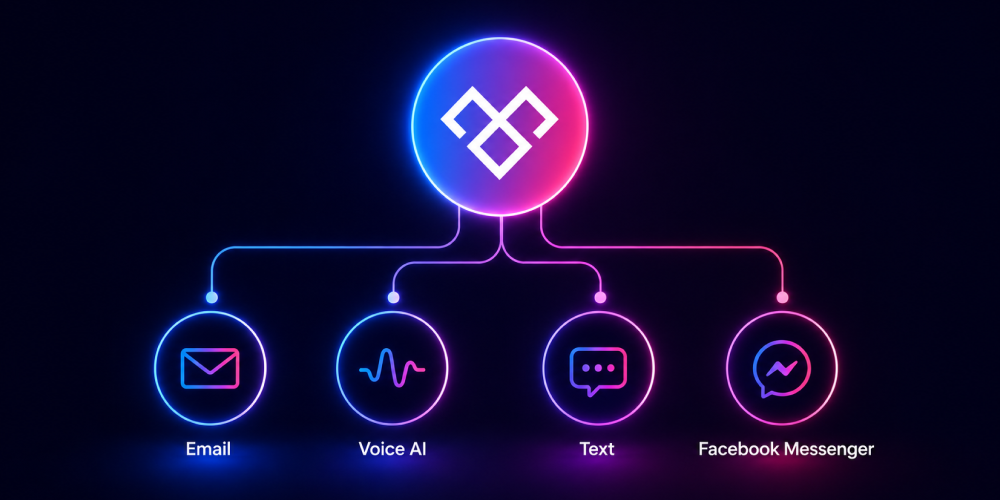
An omnichannel sales platform is software that unifies every channel a business sells through - SMS, phone, email, web chat, and more - so that a customer experiences one conversation, no matter who they are speaking to at the company.
Omnichannel vs. Multichannel: What's the Difference?
The two terms get used interchangeably, but they are not the same thing.
Multichannel means a business is present on several channels. Omnichannel means those channels are actually connected.
|
Multichannel |
Omnichannel |
|
|
Channels |
Several, run separately |
Several, unified in one system |
|
Customer data |
Siloed per channel |
One shared profile |
|
Conversation |
Restarts on each channel |
Continues across channels |
|
Experience |
Customer repeats themselves |
Context follows the customer |
|
Measurement |
Per-channel metrics |
One view of the full journey |
A multichannel business might have a texting tool, a phone system, an email platform, and a chat widget. However, these systems are not connected, and it’s as good as having 4 different versions of the same customer or lead.
An omnichannel business may use those same channels, but a single platform holds the relationship together underneath them - so whenever they reach out, context is shared.
How an Omnichannel Sales Platform Works
Under the hood, most omnichannel sales platforms are doing four jobs at once.
A unified customer profile
Every interaction - a text reply, a missed call, an email open, a chat transcript - attaches to one record for that person, usually synced with the CRM.
This means there are no more multiple versions of the same lead.
Cross-channel conversation continuity
This is the category-defining feature.
When a conversation moves from one channel to another, the context moves with it - rather than reps scrambling to get context because the systems - no matter how many - are not integrated.
Channel orchestration
Good omnichannel platforms don't just join channels up - they choose between them. Orchestration means reaching the customer on the right channel at the right moment: texting first because texts get read, calling when interest peaks, emailing the paperwork afterward.
Now we’re in the era of AI, a lot of this can be handed off to AI agents and systems that can understand where a lead is at, and what the best platform to reach them is.
Shared analytics
Because everything flows through one system, reporting reflects the whole journey instead of channel fragments.
Rather than asking "how did SMS perform?" and "how did calls perform?" separately, teams can ask the question that actually matters: how many conversations turned into customers, and where did the rest fall out?
Benefits of an Omnichannel Sales Platform
Let’s take a look at some of the biggest benefits of an omnichannels sales platforms for businesses.
Speed
The most immediate (and obvious) benefit is speed.
When channels are unified and orchestration is automated, the first response to a new lead happens in seconds rather than hours - and in lead-driven industries, response time can make all the difference.
No Lost Context
The second is that nothing falls through the cracks. In a multichannel setup, every gap between tools is a place where a lead can disappear for seemingly no reason: the text that never made it into the CRM, the voicemail nobody logged, the chat that ended when the visitor closed the tab.
One system holding one thread means every conversation has a next step, an owner, and a record.
Customers Get To Use Their Preference
This one is pretty significant, and often overlooked as well.
Customers get to actually use the channel they prefer, which makes everything run more smoothly.
An omnichannel platform makes channel preference a non-issue: whichever door the customer walks through, they end up in the same conversation.
Better Data = Better Retention
Lastly, the data gets a whole lot better.
One unified record per lead means cleaner CRM data, more accurate attribution, and reporting that describes the funnel as the customer experienced it rather than as the tool stack happened to divide it.
What to Look For in an Omnichannel Sales Platform
If the case for omnichannel is clear, the buying decision is where things get murky, because plenty of software now wears the label. Five criteria separate genuine omnichannel sales platforms from multichannel tools with better marketing.
Native SMS and voice
For sales conversations, text and phone are where leads actually respond - and they're the channels most often duct-taped onto platforms built for email.
If texting or calling runs through a thin third-party integration, conversation continuity usually breaks exactly where it matters most.
Deep CRM integration
The platform should read from and write to your CRM automatically - every message, call outcome, and captured detail - without reps doing data entry.
If the "integration" is a nightly sync or a manual export, the unified profile is a fiction.
AI and automation that can hold a conversation
Orchestration rules are table stakes. The stronger test is whether the platform's AI can conduct a genuine two-way exchange - answer a question, ask the next qualifying one, and know when to bring in a human - rather than firing templated sequences.
Compliance built in
The moment SMS and voice enter the mix, so do TCPA, consent requirements, opt-out handling, and quiet hours. A platform serious about these channels manages consent across all of them centrally. One that never mentions compliance is telling you something.
Journey-level reporting
Look for analytics organized around conversations and outcomes - leads engaged, appointments booked, conversions - not just per-channel activity counts.
How Meera Approaches the Omnichannel Sales Platform Problem
Meera is a conversational AI platform built for exactly the scenario this article keeps returning to: businesses that win or lose on lead conversations.
It starts where most B2C leads actually respond, over SMS, and expands across voice, email, and other channels to reach each lead on the one they're most likely to answer. The reason SMS anchors the platform is simple. Only 19% of people pick up a call from a number they don't recognize, while text messages see a 98% open rate. That gap is why the schools, lenders, and home services teams Meera works with keep hitting the same wall: leads who ignore calls and emails will often reply to a well-timed text.
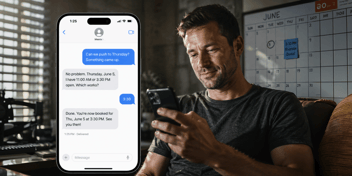
Meera's AI engages every new lead by text within seconds, holds a natural two-way conversation to answer questions and qualify interest, and books appointments directly onto your team's calendar.
When a lead is ready to talk, Meera doesn't hand them a phone number - it warm-transfers them into a live call with a rep who already has the full conversation context, then follows up by text afterward so the thread never drops.
Every exchange syncs to your CRM automatically, and TCPA-compliant consent and opt-out handling are built into every channel.
For teams in insurance, higher education, financial services, and home services, that adds up to one continuous conversation from first inquiry to booked appointment - which is the whole point of omnichannel.
Frequently Asked Questions
What's an example of omnichannel selling?
A lead fills out a web form, receives a text within seconds, asks a few questions over SMS, is transferred into a live phone call with a rep who can see the whole exchange, and gets a text confirmation afterward. One conversation, three channels, zero repetition.
What's the difference between omnichannel and multichannel?
Multichannel means selling on several channels that operate independently, each with its own data and history. Omnichannel means those channels are connected through one platform, so context and conversation carry across all of them.
Is a CRM an omnichannel platform?
Not by itself. A CRM is the system of record - it stores customer data and history. An omnichannel sales platform is the system of engagement that conducts conversations across channels, and it works best tightly integrated with a CRM rather than instead of one.
What channels should an omnichannel strategy include?
Start with the channels your customers actually use to make decisions. For lead-driven businesses, that's almost always SMS and phone first, with email for documentation and web chat for early questions. It's better to fully connect two high-response channels than to loosely bolt together six.
Seeing it is faster than reading about it. If your leads arrive by form fill, phone call, or text - and too many of them go quiet before a rep ever connects - see what one continuous conversation across text and voice does to your conversion rate.
About the Author

Grant Weherley