










.svg)
.svg)
.svg)

.svg)
.png?width=512&height=512&name=guru%20(1).png)
.svg)

.png?width=199&height=109&name=salesforce-logo1-removebg-preview%20(1).png)



.svg)

.svg)
.svg)

.webp?width=716&height=569&name=banner-img%20(1).webp)


How to Follow Up with Event Leads (Without Losing Them to a Cold Inbox)
You just wrapped up your fall open house. Or your booth at the home and garden show. Or your community event where 300 people signed up to learn more.
Two weeks later, almost none of them have replied to your follow-up.
This is the event lead problem in a nutshell. The conversations at the event were real. People filled out a form, gave you their number, asked questions, even said "yes, please follow up." But the moment they left the parking lot, your odds of reaching them dropped off a cliff. The follow-up died in an inbox they never opened. The voicemail you left was deleted before they listened to it.
At Meera, customers come to us with event management challenges all the time. So we put together this guide for marketing and sales teams at B2C companies who are tired of watching their event spend evaporate the week after the show.
We'll cover the timeline that actually works, the channels that get replies, how to segment leads so your team isn't wasting time on tire-kickers, and the templates and automation moves that turn a list of event sign-ups into booked appointments.
Why most event lead follow-up fails
If you've ever wondered why event leads don't convert at the rate you expected, it usually comes down to four things:
1. The follow-up is too slow. The average team sends their first post-event email three to five days after the show. By then, the lead has talked to your competitors, gone home, caught up on life, and forgotten what your booth even looked like.
2. The follow-up is in the wrong channel. Most teams default to email because it's easy to bulk send. But email open rates for post-event campaigns hover around 20%. Text messages get opened 98% of the time. Only 19% of people pick up a call from a number they don't recognize. If your follow-up plan is "email first, then call," you're starting the race four laps behind.
3. The follow-up doesn't sound like a person. "Thanks for visiting our booth! Here's a recap of our services." That message gets ignored in seconds. It sounds like every other vendor. It doesn't reference what was actually discussed. It doesn't ask a question. It doesn't invite a reply.
4. There's no system for who follows up with whom, when. Hot leads get the same generic drip as people who entered a giveaway. Your team is left to manually triage hundreds of contacts and inevitably lets the warm ones slip.
The fix isn't more effort. It's a better system. Here's what that looks like.
The post-event follow-up timeline that actually works
The window for converting event leads is shorter than most teams realize. Here's a timeline built around how consumers actually behave after an event.
Within hours (Day 0)
The single highest-leverage moment in your entire follow-up is the same day you met the lead. They still remember you. They're sitting in their car, or back at home that evening, or scrolling their phone before bed.
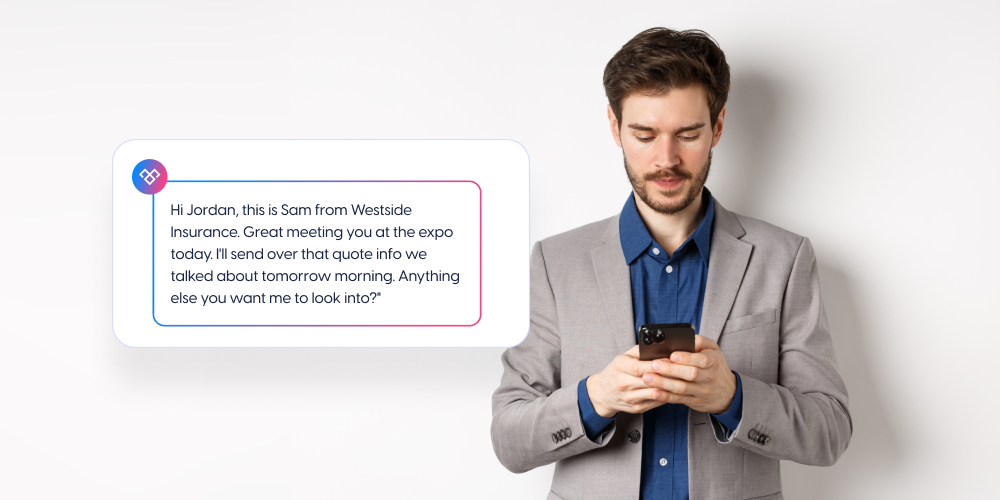
Send a short, personal text within a couple of hours of the conversation. Not a confirmation email. A text. Something like: "Hi Jordan, this is Sam from Westside Insurance. Great meeting you at the expo today. I'll send over that quote info we talked about tomorrow morning. Anything else you want me to look into?"
Two things happen. First, you're the only company texting them while everyone else queues up Monday email blasts. Second, you've opened a two-way channel. They can reply right there, in the medium they actually use.
Day 1 to 2
Now send the email. But not a "thanks for visiting" email. Send the specific thing you promised: the rate sheet, the program details, the next step. Reference the conversation by name. ("You mentioned you're shopping for coverage before your renewal in March. Here's a quick breakdown of what we discussed.")
If you didn't promise anything specific, send something useful that matches their stated interest. Generic recap emails are noise. Specific, promised follow-throughs are signals that you were actually paying attention.
Day 3 to 5
This is where most teams stop and where the leads they could have won start to go cold. Send a second text. Reference your earlier message. Ask a simple, low-pressure question that invites a reply: "Hi Jordan, did you get a chance to look at that info I sent? Happy to answer any questions."
One question. Easy to answer. No call-to-action ladder, no calendar link buried in three paragraphs.
Day 7 to 10
By now, you should have a clear signal: replied or didn't. If they replied, you're in a real conversation, and a person on your team should be driving it. If they didn't reply, send one more touch. This is where a phone call can finally work, because they've heard from you twice already in channels they actually checked.
They know who you are. Calls from strangers go straight to voicemail. A call from "the person from the home show who texted me about the financing options" actually gets answered.
Day 14 to 30
Most leads who don't convert in the first two weeks aren't dead. They're just busy. Life got in the way. Move them into a longer-cadence nurture. One text every 7 to 10 days with something useful: a new offer, a relevant tip, an upcoming event. The goal is to stay top of mind without becoming the company everyone mutes.
The teams that nail this 30-day window consistently double or triple the conversion rate of teams that send "the email" and hope for the best.
Channels that work for event lead follow-up
Not all channels are created equal. Here's how to think about each one in the post-event window.
SMS
This is the channel that does the heaviest lifting. People read texts. They reply to texts. They don't feel ambushed by texts the way they feel ambushed by phone calls. For B2C event leads, SMS should be your primary follow-up channel for the first 10 days. Use it to confirm attendance, to remind, to ask one simple question at a time, and to schedule the next step.
The key is that the texts have to feel like a person wrote them. Generic "Hi {FirstName}, thanks for visiting!" blasts are worse than no follow-up at all. They train people to ignore your number.
Email still has a role. It's the right channel for anything with attachments, anything long, anything the lead might want to forward to a spouse or family member. Use email for the documents and details. Use SMS for the conversation that points them to those details.
Phone
Phone calls work best as a third or fourth touch, after you've already established who you are. Cold calling event leads on Day 1, before they've heard from you on SMS, is the fastest way to get sent to voicemail forever. Once you're a familiar name, the phone becomes powerful again, especially for closing the appointment.
LinkedIn and social
For most B2C events, social isn't the main channel. But for higher-consideration purchases (a major financial decision, a home renovation, a multi-year program), a low-key Facebook or Instagram follow can keep your brand visible without feeling pushy. Don't DM strangers. Just be there when they look you up.
How to segment and prioritize event leads
Not every lead deserves the same effort. The biggest mistake teams make is treating the person who walked up asking specific buying questions the same as the person who entered a giveaway. Segment your list within 24 hours of the event so your hottest leads get a human-driven follow-up and your cooler ones get a smart automated sequence.
By intent
The clearest signal is what they actually said. Did they ask about pricing? Schedule a callback? Request a specific document? Those are high-intent leads who need to hear from a real rep within hours. Did they just drop their email for a swag entry? Those leads go into a slower nurture and don't deserve a rep's time until they engage.
A simple three-tier model works for most teams:
- Hot: Asked specific buying questions, requested a callback, or asked for a quote. Same-day SMS from a rep, plus a personal email the next morning.
- Warm: Engaged in real conversation, took a brochure, expressed general interest. Automated SMS opener, followed by a personalized email and a Day 5 nudge.
- Cool: Entered a giveaway, dropped a card, or had a 30-second conversation. Automated nurture only. Promote them if they engage.
By role and life stage
Even within B2C, your leads aren't identical. A retiree shopping for Medicare supplement plans needs a very different conversation than a 28-year-old getting their first life insurance policy. A parent researching a college for their teenager has different questions than a returning adult learner. Segment your follow-up content by who the person actually is, not just by which event they attended.
By event type
A community fair generates very different leads than an industry-specific expo. Open house attendees who showed up in person have higher intent than people who registered online and didn't attend. Bake the event type into your segmentation so your team knows what kind of conversation to expect.
5 common mistakes that kill event lead conversion
1. Waiting until Monday. The leads you generated Saturday are 60% colder by Monday morning. Send the first touch the same day, even if it's just a quick text from your phone.
2. Sending the same email to everyone. Mass blasts feel like spam, because they are spam. The teams that win the post-event window are the teams that segment hard and personalize at the segment level.
3. Asking for a meeting in the first message. Your first follow-up is not the moment to ask for 30 minutes on someone's calendar. Your first follow-up should be a useful, low-pressure touch that earns the right to ask later.
4. Stopping after two attempts. Most conversions happen on the fourth, fifth, or sixth touch. Most teams stop after the second. The leads you're "throwing out" as dead are often just waiting for the third message.
5. Treating event leads like cold leads. These people raised their hand. They came to your event. They gave you their number. Talk to them like the warm leads they are, not like a list you bought.
SMS templates for event follow-up
These are starting points, not scripts. Customize them with the actual event name, your actual rep's name, and details from the actual conversation. The more specific, the better the reply rate.
Same-day opener: "Hi Jordan, this is Sam from Westside Insurance. Great meeting you at the home and garden expo today. Just wanted to say thanks for stopping by. I'll send over that info on the bundled policies tomorrow morning."
Day 2 follow-through: "Morning Jordan, just sent the policy comparison to your email. Take a look when you have a minute and let me know what questions come up."
Day 4 check-in: "Hi Jordan, any thoughts on the comparison I sent? Happy to walk through anything that's unclear."
Day 7 light touch: "Hey Jordan, no rush on your end. Just wanted to mention we're running the bundle discount through end of month if it's helpful for your timeline."
Day 14 re-engagement: "Hi Jordan, hope you're doing well. Quick one: are you still looking at coverage options, or have you found something that works? Either way, no pressure."
Aged lead reactivation (30+ days): "Hi Jordan, it's Sam from the home expo back in March. We just rolled out a new option that lines up with what you were asking about. Worth a 5-minute look?"
The pattern: short, specific, one question, no pressure ladder.
How to automate event follow-up without it feeling robotic
This is where most teams get stuck. They know they need to follow up faster and more consistently than humans can manage. But every automation tool they've tried sounded like a robot, and they ended up turning it off.
The fix is automation that's actually conversational, not just scheduled. There's a big difference between:
Bad automation: A scheduled drip that fires the same three messages at every lead regardless of how they reply.
Good automation: A two-way system that reads the lead's reply, responds appropriately, asks the next logical question, and only loops in a human when the lead is actually ready to talk.
The first one trains people to ignore your number. The second one feels like a real conversation, gets real replies, and only takes a rep's time when there's a qualified person on the other end.
The practical rules:
- One question at a time. Real conversations don't ask three things at once.
- Respond to what the lead actually said. If they say "I'm shopping for my mom," don't reply with a generic next step about coverage for themselves.
- Know when to hand off. As soon as the lead is qualified and ready, get them to a person. Automation that tries to close the deal is automation that loses the deal.
- Send messages at human hours. Texts at 11pm look like spam. Texts at 9:15am on a Tuesday look like a real person.
Done right, automation isn't a replacement for your team's relationships. It's the layer that lets your team have those relationships at scale, instead of dropping the ball on leads three through three hundred.
How Meera helps event teams scale post-event follow-up
Meera is an AI texting platform that gets leads on the phone without your team doing the constant chasing. For event-driven B2C teams, that means three specific things:
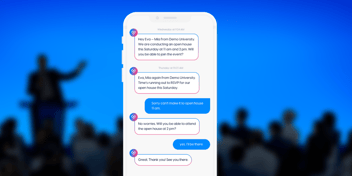
Instant first touch, every time. The moment a lead is added to your CRM from the event, Meera sends a real conversational text within seconds. Not a "thanks for visiting" blast. A specific, contextual opener that invites a reply.
Two-way conversations, not one-way drips. Meera responds to what each lead actually says. If they ask a question, Meera answers it. If they're ready to book, Meera schedules the appointment. If they need a real person, Meera hands the conversation to your team with the full context attached.
Automated nurture for the slow leads. The leads who aren't ready in Week 1 don't get dropped. Meera keeps the conversation warm over weeks or months, then re-engages the moment they show new intent.
For teams running events with hundreds or thousands of leads per show, this is the difference between a lead follow-up process that scales and one that buries your reps in busywork while the warm leads quietly go cold.
Frequently asked questions
How fast should I follow up with an event lead?
Within two hours of the conversation if possible, and absolutely on the same day. Every hour you wait, the lead's recall of your booth and your offer drops. By Monday morning, you're competing with everything else in their life.
Should I call or text first?
Text first. Almost always. Only 19% of people answer calls from numbers they don't recognize, but text messages get a 98% open rate. Use SMS to establish who you are, then transition to a phone call once they know your name.
How many follow-up attempts should I make?
Plan for six to eight touches over 30 days. Most conversions happen between touch four and touch six. Teams that stop at two or three are leaving the majority of their winnable leads on the table.
Is it okay to text event leads who didn't explicitly opt in?
Always confirm consent at the event itself. The cleanest approach is a checkbox or verbal confirmation at the booth that explicitly mentions follow-up by text. Compliance rules vary by region and industry, so work with your legal team to set up the right opt-in language for your events.
What's the right balance of SMS, email, and phone?
For B2C event leads in the first 30 days, a good ratio is roughly 60% SMS, 25% email, 15% phone. SMS for the conversation, email for the documents, phone for the close.
Can I automate event follow-up and still sound human?
Yes, but only with the right tool. Static drip campaigns sound like robots because they are robots. True conversational AI reads what the lead says, responds in context, and only escalates to a human when the lead is actually ready. That's the difference between automation that helps you scale and automation that trains people to ignore your messages.
What's the single biggest mistake teams make?
Waiting too long for the first touch. Everything else (channel choice, segmentation, templates) matters less than the gap between the conversation at the event and the first follow-up message. Close that gap and most of your other problems get easier.
If you're running events and watching the leads go cold after the show, the follow-up system is almost always where the money is leaking out. Fix that, and the same event spend starts producing very different numbers.
Want to see how Meera handles event lead follow-up at scale? Book a quick demo and we'll walk you through it.
About the Author

Grant Weherley