












.svg)
.svg)

.svg)

.svg)
.png?width=512&height=512&name=guru%20(1).png)
.svg)


.png?width=199&height=109&name=salesforce-logo1-removebg-preview%20(1).png)





.svg)

.svg)
.svg)


.webp?width=716&height=569&name=banner-img%20(1).webp)


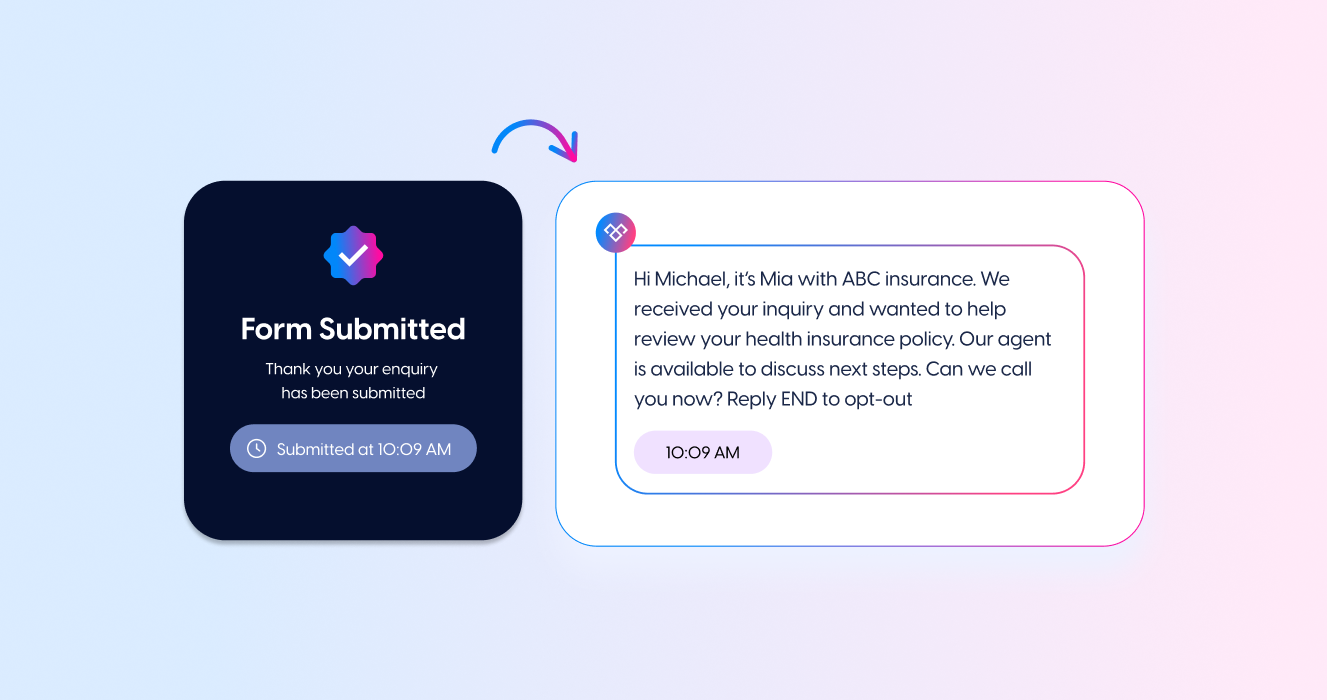
Lead follow-up time can make or break your conversion process. It is the gap between the moment a prospect expresses interest and the moment your business responds in a meaningful way. That first response shapes whether the conversation moves forward or disappears before it even begins.
For most businesses, the problem is not a lack of interest in following up quickly. The real issue is that leads often get stuck in slow systems. They come in through forms, ads, landing pages, calls, and third-party sources, then wait for someone to notice, qualify, assign, and respond. By the time that happens, the prospect may already be speaking to a competitor.
That is why improving lead follow up time is not just about telling sales teams to work faster. It is about building a system that responds immediately, keeps the conversation going, and helps prospects take the next step without unnecessary delay.
This is also where Meera stands out. Instead of relying on manual follow-up alone, Meera helps businesses respond faster, qualify leads through conversation, and move them toward booking or speaking with a live agent. In practice, that makes it one of the most effective ways to improve lead follow up time at scale.
Why lead follow up time matters
A quick response does more than create a good impression. It increases the chances of actually reaching the prospect while their intent is still high. When someone fills out a form, requests a quote, or asks for more information, they are most engaged in that moment. Waiting too long gives them time to lose interest, get distracted, or compare alternatives.
This matters even more in competitive industries where multiple businesses are targeting the same lead. Often, the company that responds first has the best chance of starting the conversation and setting the tone. A fast response does not guarantee a sale, but a slow response can cost you the opportunity before your team even gets involved.
Lead follow up time also affects more than top-of-funnel performance. Slow responses can create knock-on problems throughout the customer journey, from missed appointments to lower connect rates and weaker handoffs between marketing and sales.
What slows down lead follow up time?
Most businesses do not struggle because their teams are lazy or unmotivated. They struggle because the process itself creates delay.
Manual lead handling
When every new inquiry needs to be reviewed, assigned, and replied to manually, delays are inevitable. This becomes even more obvious when leads come in outside normal business hours or during busy periods when reps are already tied up.
Too many disconnected systems
A lead may come in through one system, get stored in another, and be followed up through a third. The more handoffs involved, the easier it is for time to be lost. Even a short delay at each stage adds up.
Weak qualification processes
Not every lead is ready for the same next step. If reps have to spend time sorting serious buyers from casual inquiries, they waste time on the wrong conversations and delay the right ones.
Poor channel choice
Some businesses still rely too heavily on email or missed calls as the first point of contact. A fast response through the wrong channel is still a weak follow-up. If the prospect does not see or engage with your message, speed alone does not solve the problem.
How to improve lead follow-up time
Improving lead follow-up time requires more than one small tweak. The best results come from fixing the points where delay happens most often.
1. Respond immediately, even if a rep is not available
The first step is simple. Shrink the gap between inquiry and response as much as possible.
If your team cannot consistently respond within minutes, the first touch should be automated in a way that still feels relevant and conversational. That is where AI can make a real difference. Instead of leaving a new inquiry waiting in a queue, the business can start the conversation right away, ask useful questions, and keep the lead engaged while the intent is fresh.
For example, businesses in fast-moving industries can use solutions like Meera for insurance to respond to inbound leads almost immediately, answer common questions, and move prospects toward the right next step without making them wait for office hours.
2. Use messaging channels that prospects are likely to notice
A quick reply only matters if the lead actually sees it.
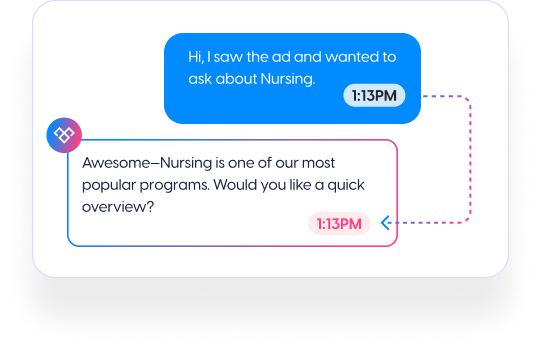
Many businesses think they are following up fast, but their response is buried in an inbox or missed entirely because it comes through a channel the prospect is not actively checking. Messaging works well because it is immediate, conversational, and easy to engage with in the middle of a busy day.
This is one reason text-based follow-up is so effective. It reduces friction and makes it easier for leads to respond naturally. Instead of forcing the prospect into a rigid sales process, it meets them where they already are and helps the conversation start quickly.
That does not mean every lead should get the same message. The point is to use a channel that supports fast, real interaction rather than simply sending out a generic automated note and hoping for the best.

3. Qualify leads before your reps spend time chasing the wrong ones
Another major source of delay is poor qualification. When sales teams have to sort through every inquiry manually, response time becomes inconsistent and valuable time gets wasted on leads that are not a fit.
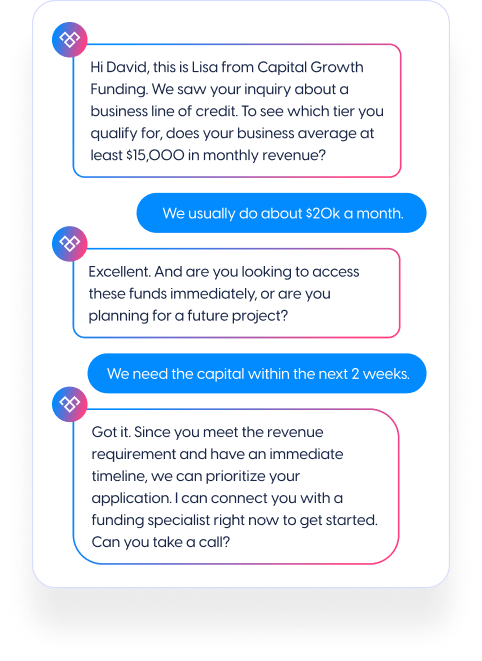
A better system captures missing details early, asks the right questions, and determines which leads are ready for human follow-up. That way, your team can spend more time on high-intent prospects and less time chasing dead ends.
This is especially important for businesses dealing with large lead volumes or multiple inbound channels. Strong qualifications help reduce bottlenecks, improve routing, and keep the follow-up process moving. It also creates a better experience for prospects because they are guided toward the right next step instead of being passed around or left waiting.
4. Let prospects book while the conversation is still active
One of the easiest ways to lose momentum is to create a gap between first contact and scheduling.
A prospect may respond quickly, show interest, and then still have to wait for someone to send available times, confirm the meeting, and follow up again. At that point, you have simply moved the delay further down the funnel.
This is why embedded scheduling is so useful. When leads can book directly through the conversation, the path from interest to action becomes much shorter. Tools built for appointment scheduling help businesses reduce that back-and-forth by allowing prospects to book, reschedule, and receive reminders without leaving the conversation flow.
That matters because improving lead follow-up time is not just about first response. It is also about shortening the time to the next meaningful action.
.png?width=372&height=332&name=chat_mockup%20(7).png)
5. Use warm call transfer for high-intent leads
Some leads are ready to speak with someone right away. In those cases, the best follow-up is not another message. It is a direct connection to a live person.
This is where warm call transfer becomes valuable. Instead of making the lead wait for a callback, the system can identify interest, confirm availability, and connect them to the right agent while the conversation is still active.
For high-intent leads, this can dramatically improve outcomes. It reduces the gap between inquiry and human conversation, cuts down on missed opportunities, and creates a smoother handoff from automation to sales.
Businesses often focus on response speed at the top of the funnel, but reducing waiting time between interest and live contact is just as important. A fast and well-managed handoff can be the difference between a qualified opportunity and a lost lead.
.png?width=395&height=327&name=chat_mockup%20(5).png)
6. Cover after-hours leads automatically
A surprising amount of lead response delay happens outside normal working hours.
Leads do not only come in during business hours. They appear at night, on weekends, and during the exact times when your team is busiest. If no one responds until the next morning, that delay may already be too long.
This is where automation provides real, practical value. It acts as a 24/7 coverage layer that keeps conversations moving even when your team is offline. Instead of making prospects wait for the next available rep, the system can acknowledge the inquiry, ask a few relevant questions, and keep the lead warm until a human steps in.
This is especially useful in high-volume or service-based industries where speed affects both conversion and customer experience. A lead that gets an immediate response after hours is far more likely to stay engaged than one that sits untouched overnight.
7. Follow up beyond the first response
Fast follow-up should not stop at hello.
Some businesses respond quickly once and then lose momentum. The prospect does not book, misses the meeting, or goes silent after the first exchange. Without a structured process for reminders and re-engagement, response speed alone will not solve the bigger conversion problem.
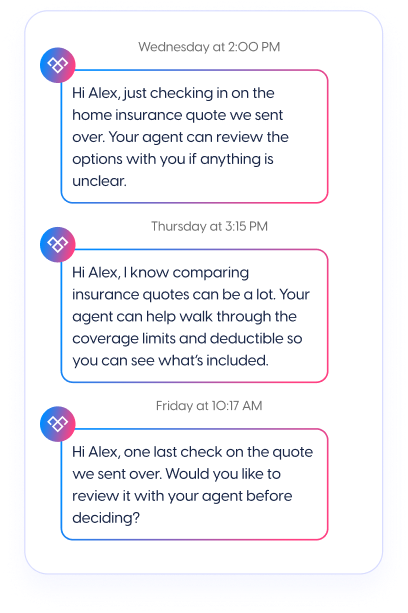
A better approach includes automatic reminders, missed appointment recovery, and timely nudges that keep the lead moving forward. This is where conversational systems outperform simple auto-responders. They do not just send a first message. They support the next steps as well.
That matters because the goal is not only to reduce first response time. The real goal is to turn more inquiries into live conversations, booked appointments, and a qualified pipeline.
8. Measure lead follow-up time the right way
You cannot improve what you do not measure properly.
Many businesses look only at average response time, but that can hide important problems. A better view is to break performance down by source, stage, and timing. For example, you may find that paid leads are contacted quickly during working hours but sit untouched overnight. Or you may discover that some reps respond fast to hot leads while others take far longer.
Useful metrics include:
- Average first response time
- Response time by lead source
- Response time during and after business hours
- Time from first response to booked meeting
- No-show recovery rate
- Percentage of leads never contacted
Once you can see where the delay happens, it becomes much easier to fix the process rather than blaming individual reps.
Why Meera is the best way to improve lead follow-up time
Tips are easy. Applying them to every lead, from every source, at every hour of the day is where most teams fall apart. Reps get busy. Forms come in at 9pm. The lead that filled out a quote request on Saturday morning doesn't hear back until Monday afternoon, by which point three competitors have already called.
This is the gap Meera was built to close. Instead of stitching together a CRM, a dialer, an SMS tool, and a prayer that someone notices the new lead in time, Meera handles the first move automatically and keeps the conversation going until the prospect is ready for a call.
Here is what that looks like in practice:
- Respond in seconds, not hours. Every new inbound lead gets a conversational text within 15 seconds of opt-in, 24/7. No queue. No "I'll get to it after this call."
- Qualify through real conversation. Meera asks one question at a time, handles replies dynamically, and figures out who is actually worth a rep's time before anyone picks up the phone.
- Guide ready prospects toward booking. When a lead is warm, Meera moves them toward a scheduled call or a live transfer instead of letting them drift back into the inbox graveyard.
- Hand off to a human at the right moment. Reps stop spending their day on cold dials and start their day with conversations that are already pre qualified and waiting.
- Keep nudging the ones who go quiet. No-shows, request-but-didn't-book leads, and aged inquiries get automated follow-ups so nothing slips because someone forgot to set a reminder.
The point is not to add another tool to the stack. The point is to remove the manual gaps that cause slow follow-up in the first place. If your team is generating more inbound demand than it can realistically work, that is the difference between leads that convert and leads that quietly cost you money.
Final thoughts
If your lead follow-up process still depends on reps checking alerts, writing one-off replies, and manually chasing prospects, your response time will always be inconsistent.
The businesses that improve this metric most successfully do three things well. They respond immediately, they use channels people actually engage with, and they automate the parts of the process that create delay.
That is why Meera is such a strong fit for this topic. It supports the exact actions that help businesses improve lead follow-up time in practice, not just in theory. When faster response, smarter qualification, scheduling, and human handoff all work together, more leads turn into real opportunities.
About the Author