














.svg)
.svg)

.svg)

.svg)
.png?width=512&height=512&name=guru%20(1).png)
.svg)


.png?width=199&height=109&name=salesforce-logo1-removebg-preview%20(1).png)





.svg)

.svg)
.svg)


.webp?width=716&height=569&name=banner-img%20(1).webp)




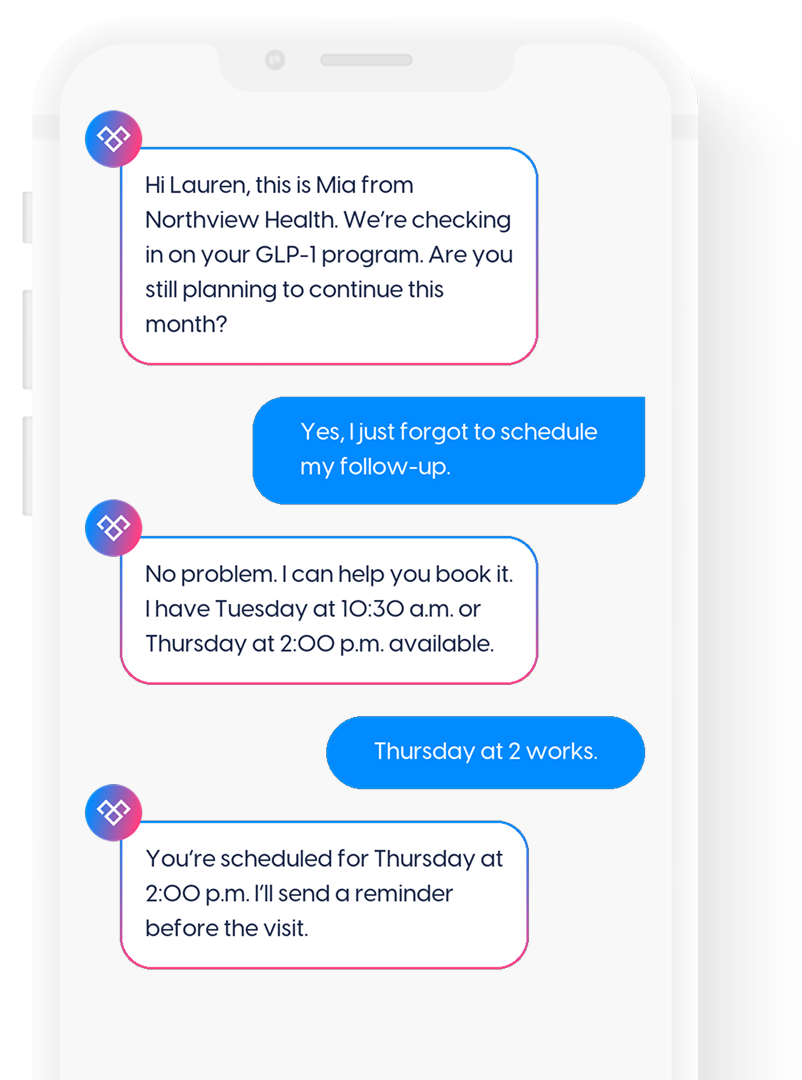
THE PROBLEM
GLP-1 patients often go quiet after they enroll

Patients enroll but then miss refill windows, payment steps, progress check-ins, or the next program touchpoint.
.svg)
Early engagement can drop before patients build a consistent program rhythm.

Lapsed patients may be willing to restart but need a simple path back to the care team.

Staff do not always have time to manually follow up with every active, paused, or inactive patient.
How Meera supports GLP-1 retention, reactivation, and care team routing
1
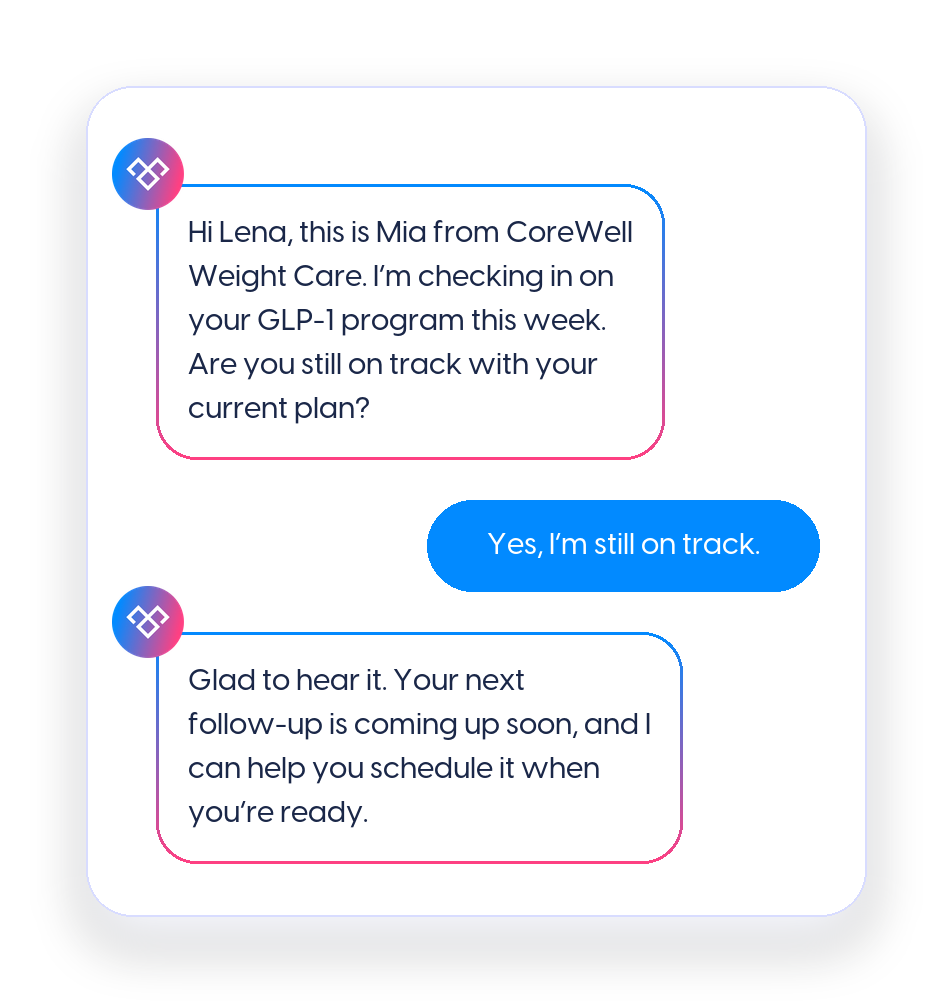
Match outreach to the patient’s program status
Meera can support different outreach paths based on where the patient is in the GLP-1 lifecycle: active, due for a follow-up, approaching a refill step, payment pending, paused, or inactive.
That keeps the message relevant. Active patients get check-ins that help them stay on track, while lapsed patients receive a reactivation path that invites them to restart or speak with the care team.
2
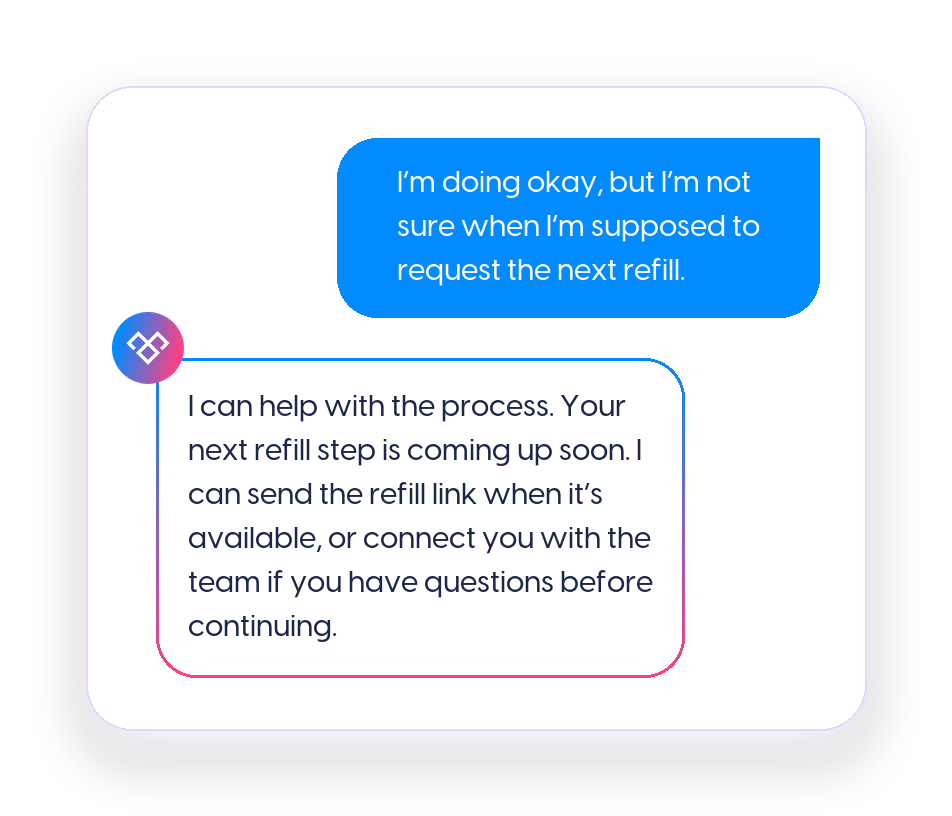
Send check-ins that surface issues earlier
Recurring check-ins give patients an easy way to raise concerns before they become drop-off points.
Patients may mention timing problems, refill confusion, billing questions, side effects, or uncertainty about continuing.
Meera can capture those replies and route the ones that need human attention.
The goal is not to provide medical guidance by text. It is to help the team see who is stable, who needs a next step, and who should be connected with a person.
3
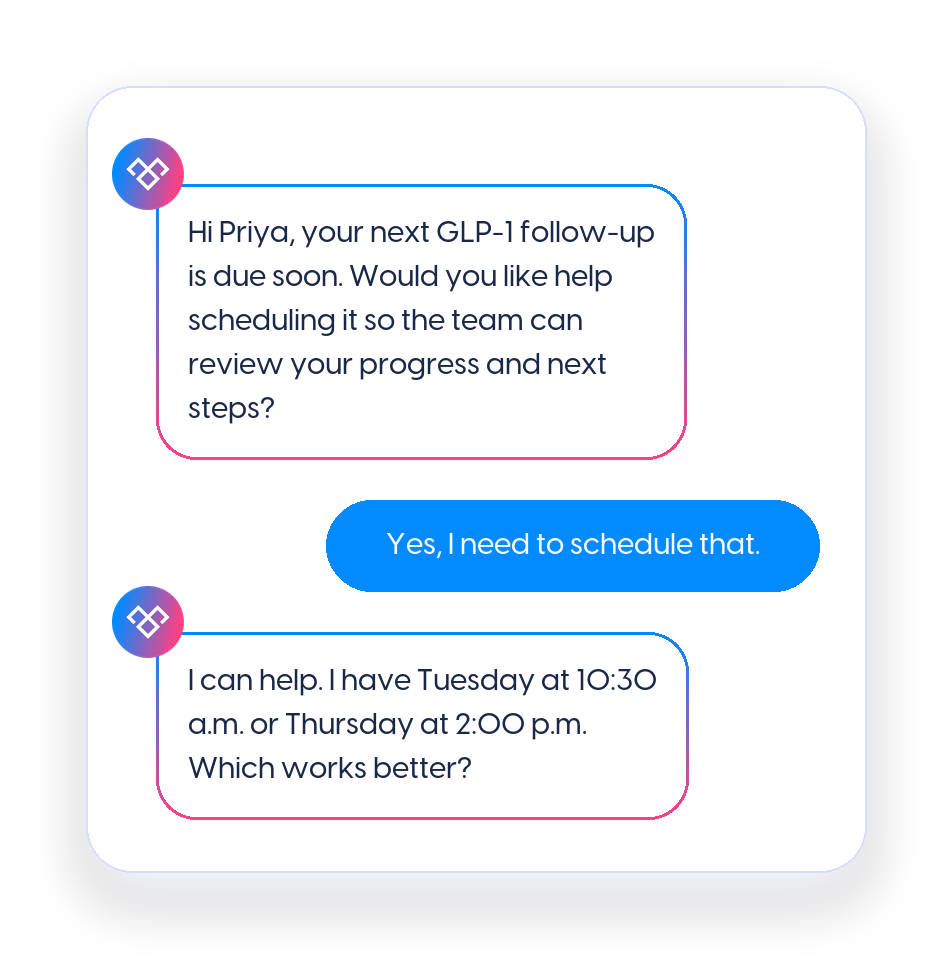
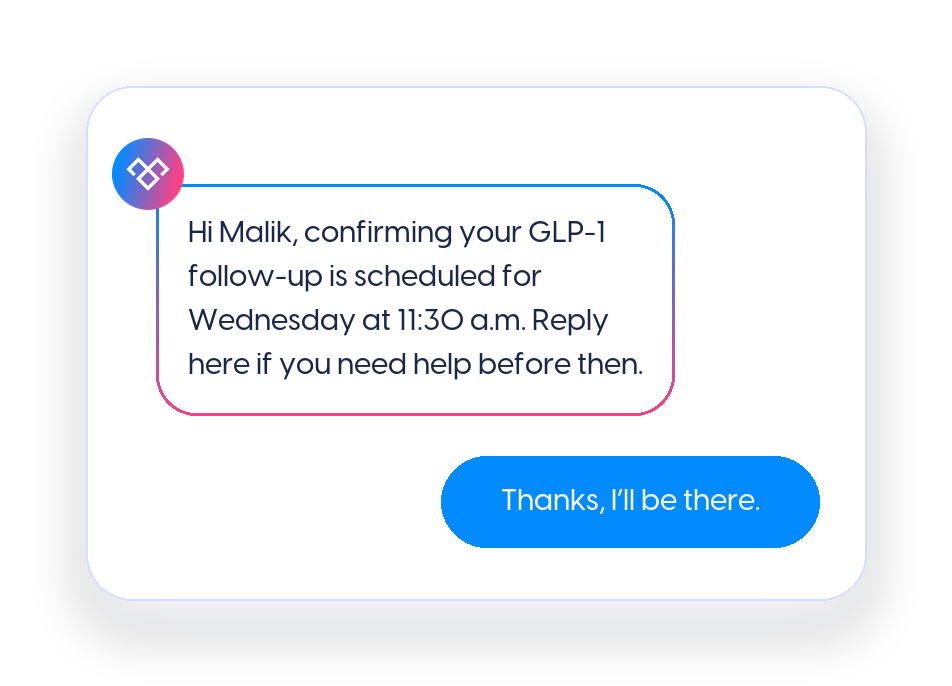
Prompt refill, payment, and follow-up steps
GLP-1 retention often depends on small operational steps happening on time. A missed refill step, billing issue, or unscheduled follow-up can interrupt the patient journey even when the patient still wants to continue.
Meera can support approved reminders for refill-related steps, payment links, follow-up scheduling, and other program actions. If a patient asks about medication, dosage, side effects, eligibility, or treatment changes, Meera routes the conversation to the care team.
4
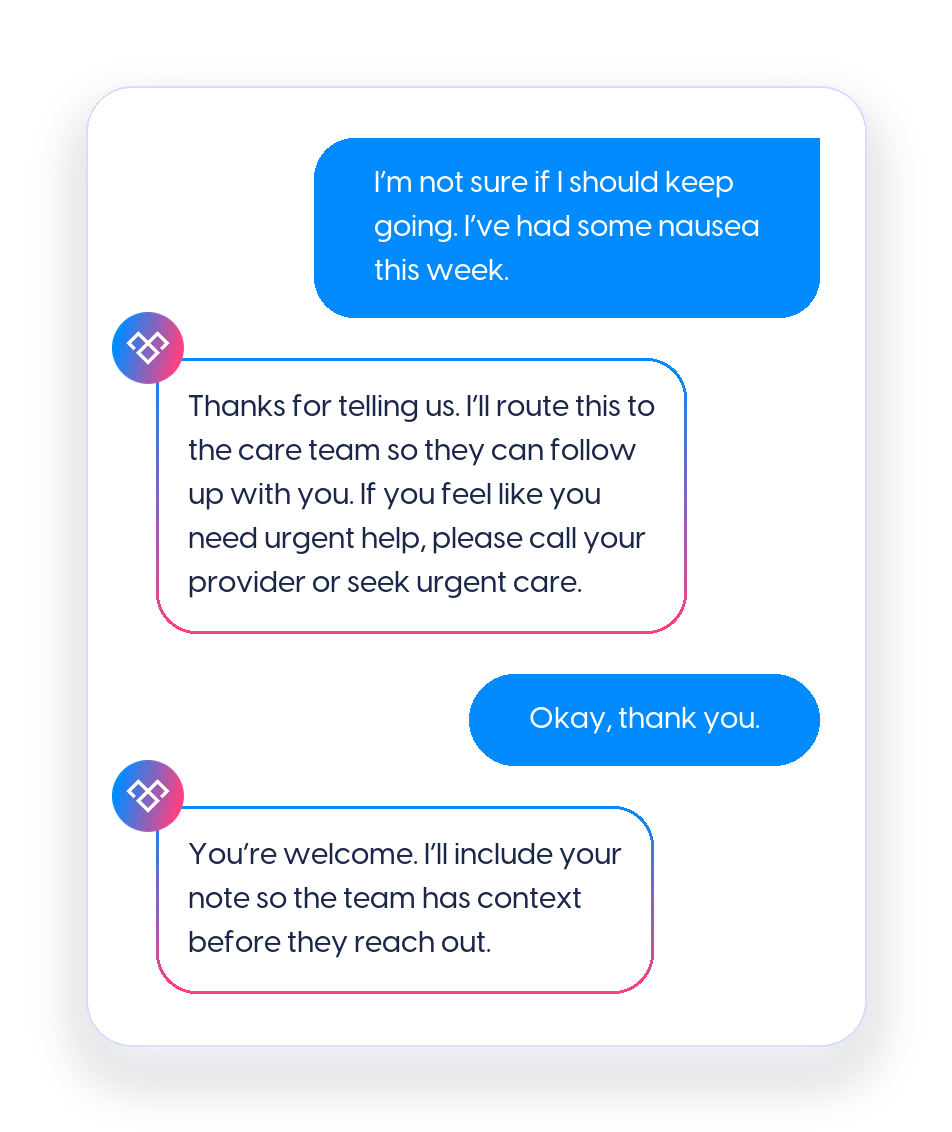
Route clinical or program concerns to the right team
Not every reply is a routine reminder. Some patients may mention side effects, medication availability, cost concerns, uncertainty about continuing, or questions that require clinical review.
Meera can identify when the conversation should move to a person and support a live handoff or scheduled callback when configured. Clinical guidance, medication decisions, dose changes, side-effect evaluation, and treatment recommendations stay with the healthcare team.
5
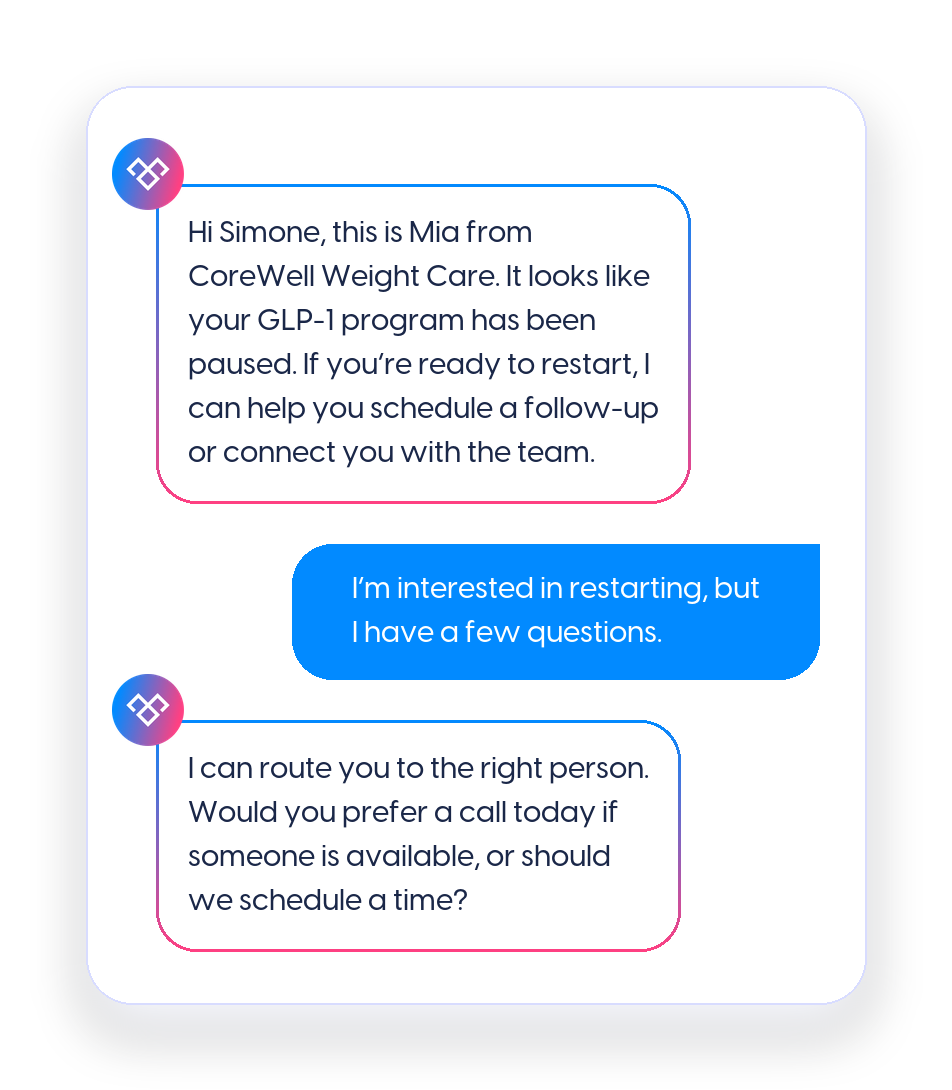
Re-engage patients who pause or lapse
Some patients stop responding, miss a refill window, pause their subscription, or leave the program before the team can understand why. Meera can support a reactivation campaign that gives those patients a simple path back.
The message can acknowledge the pause without judgment, ask whether the patient still wants to continue, and offer a clear next step: schedule a follow-up, request help restarting, or speak with the care team first.
6
Keep active and lapsed patients in the right workflow
Active and inactive patients need different follow-up paths.
Active patients may need check-ins, refill-related prompts, billing reminders, or follow-up scheduling.
Patients who have paused or gone quiet need a re-entry path that confirms interest, captures the barrier, and routes them to the team when they need help restarting.
Why Texting Works Better Than Calls or Email
GLP-1 retention depends on timing. Patients may still want to continue, but missed refills, unanswered calls, and delayed follow-ups can turn a small gap into program drop-off.

Patients can raise concerns before they disappear

Refill and follow-up prompts stay easy to act on

Lapsed patients can restart with a clear next step
Keep more GLP-1 patients active with Meera
Meera helps GLP-1 programs run ongoing engagement and reactivation outreach, prompt the next refill or follow-up, route concerns to the care team, and guide lapsed patients back into the program without asking staff to manually chase every patient.