














.svg)
.svg)

.svg)

.svg)
.png?width=512&height=512&name=guru%20(1).png)
.svg)


.png?width=199&height=109&name=salesforce-logo1-removebg-preview%20(1).png)





.svg)

.svg)
.svg)


.webp?width=716&height=569&name=banner-img%20(1).webp)




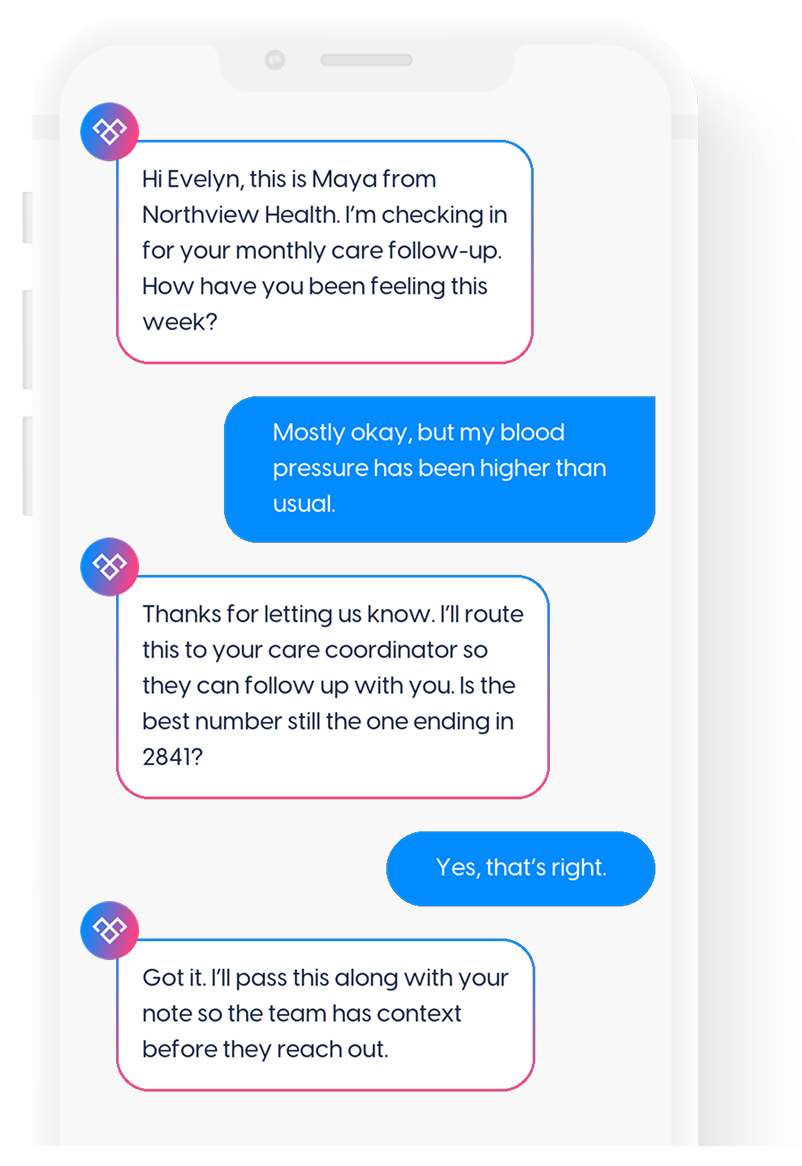
THE PROBLEM
Chronic care follow-up breaks down when outreach is manual

Monthly patient check-ins compete with live calls, appointments, and care team priorities.
.svg)
Stable patients still need documented engagement and a clear next step.
.svg)
Concerning replies can sit too long in voicemails, inboxes, or scattered notes.
.svg)
Care teams lose visibility into who responded, who needs help, and who still needs follow-up.
How Meera helps care teams stay connected between visits
1
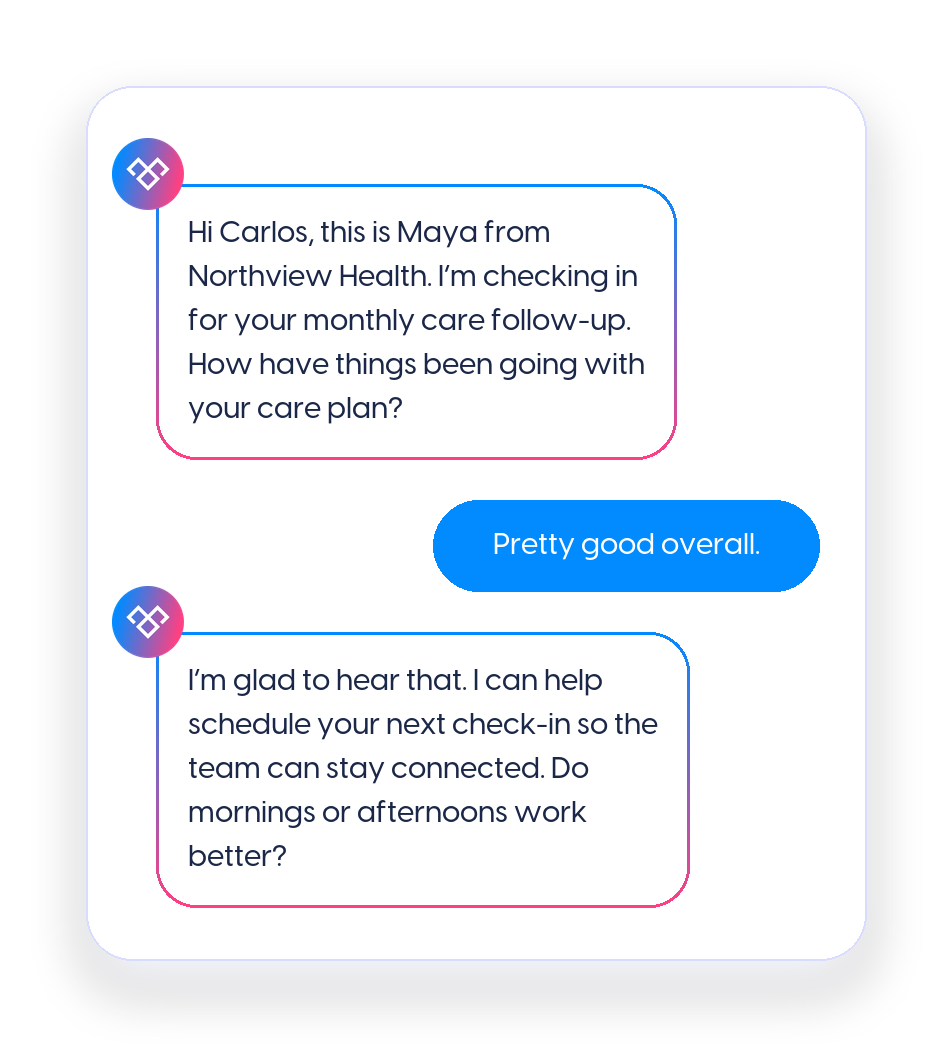
Start outreach when a patient is due for their monthly check-in
Meera can begin outreach when a patient is due for a monthly chronic care follow-up, appears on a care management list, or reaches a team-defined follow-up date.
The first message keeps the ask simple: check in, confirm how the patient is doing, and make it easy to reply.
This helps care teams reach patients without starting every month with manual call lists, voicemail attempts, or one-off reminders.
2
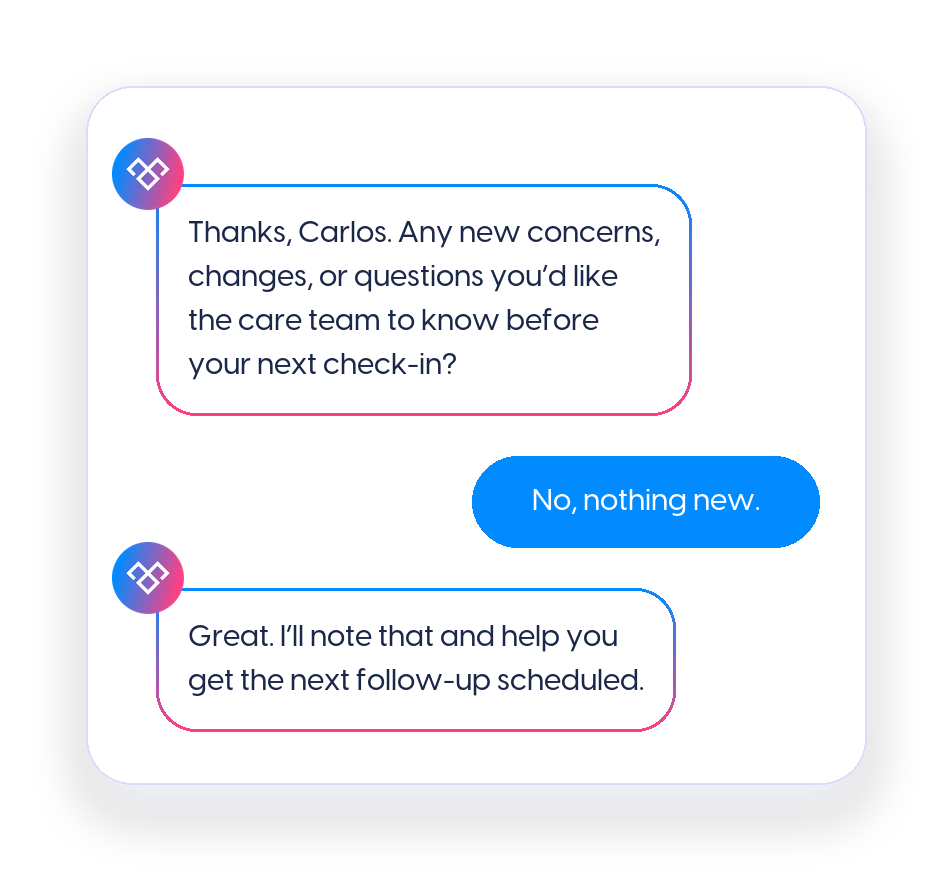
Ask a focused question patients can answer quickly
Meera can ask a simple status question that helps the team understand whether the patient is stable, has a concern, needs scheduling help, or should be routed to a coordinator.
The goal is to capture a useful response without making the patient write a long explanation or wait for a call.
3
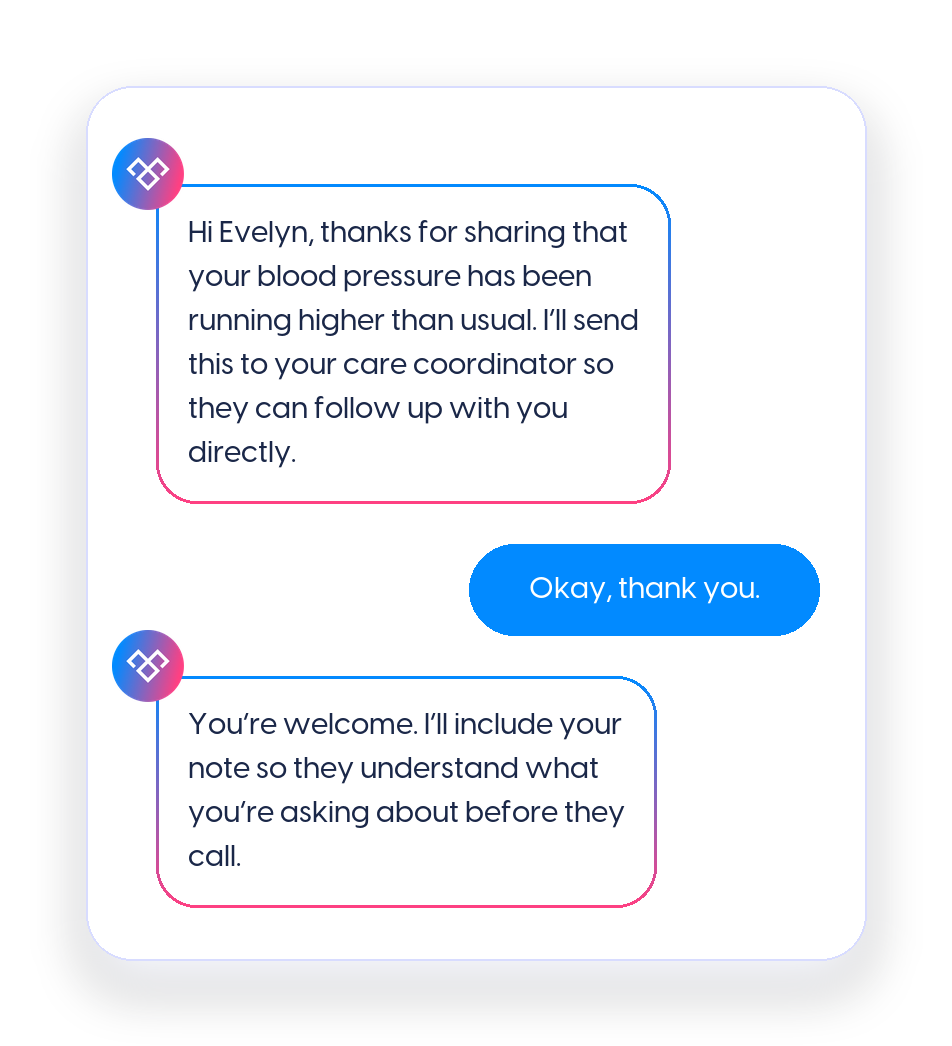
Route concerns to a care coordinator with context
When a patient mentions a concern, Meera can route the conversation to the right team member instead of letting the reply sit in a general inbox.
The handoff gives the coordinator useful context from the patient’s message so the team can pick up the conversation without asking the patient to start over.
This is especially helpful when the patient mentions symptoms, confusion about instructions, a medication question, access issues, or a request to speak with someone.
4
Schedule the next check-in for stable patients
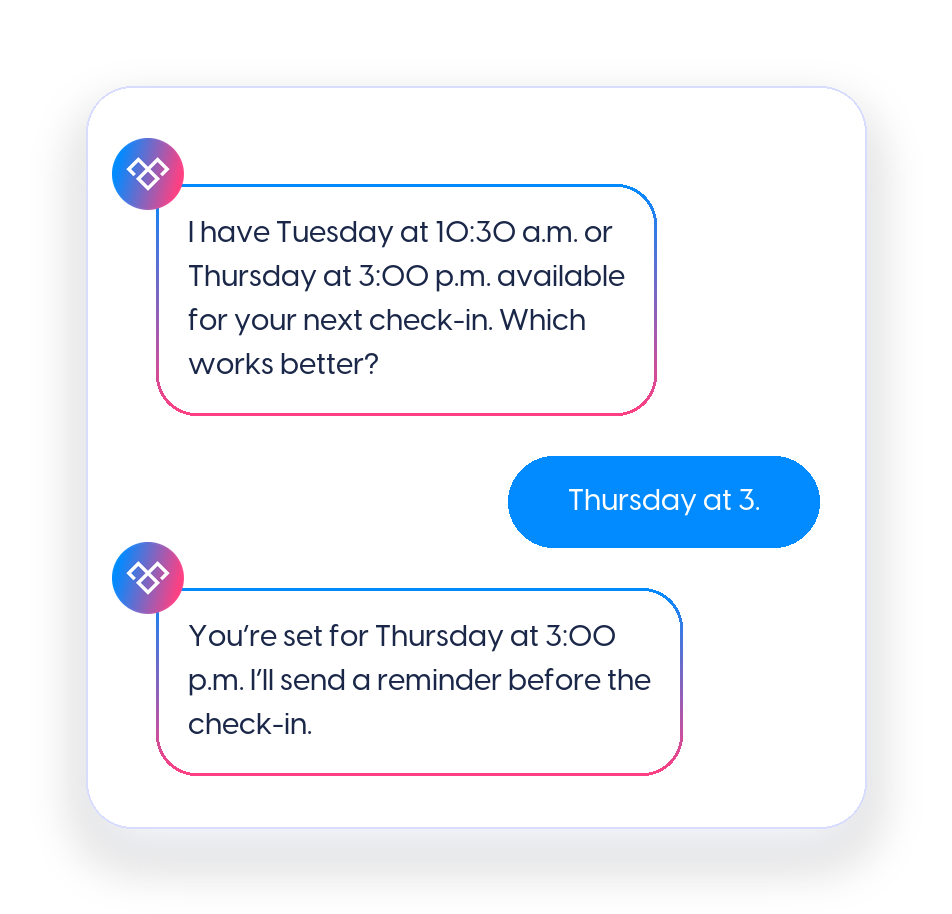
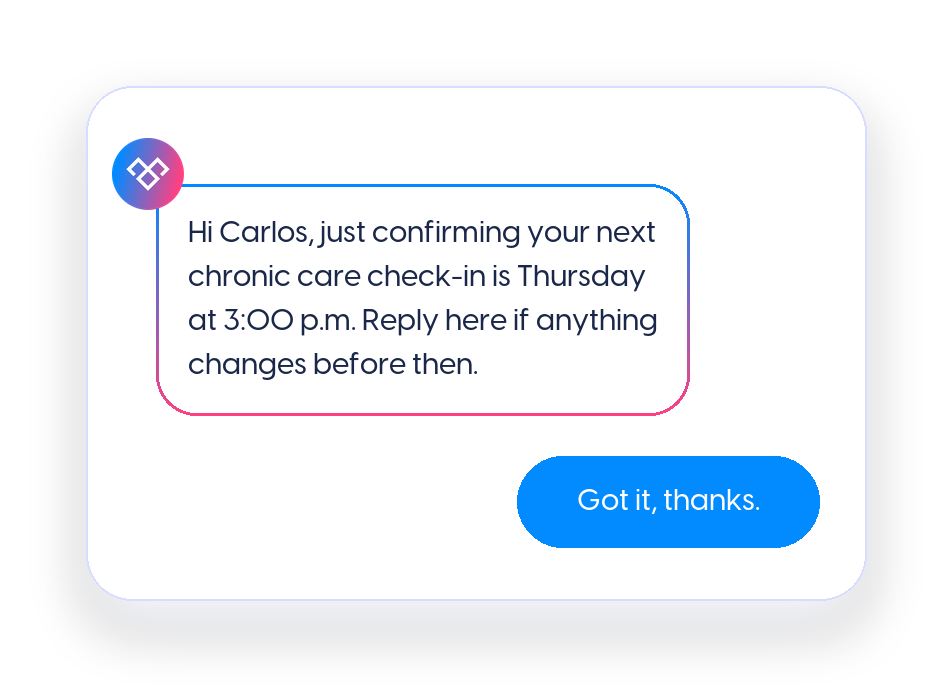
Not every patient needs a live handoff. When someone says they are stable or has no new concerns, Meera can help move them toward the next scheduled touchpoint.
That keeps the patient engaged without turning every monthly outreach into a manual staff task.
5
Keep the follow-up record easier to review
Each outreach attempt and patient reply can help the team understand who responded, who needs a coordinator, who scheduled the next check-in, and who may need another follow-up attempt.
Meera should not replace the team’s clinical documentation process, but it can help create a clearer record of patient touchpoints for staff to review and act on.
Why Texting Works Better Than Calls or Email
Chronic care follow-up depends on consistency. Patients may miss calls or overlook portal messages, but a simple text gives them a lower-friction way to respond between visits.
.svg)
Patients can share quick updates without waiting on hold
.svg)
Care teams can spot concerns before the next visit
.svg)
Stable patients can schedule the next check-in faster

Staff can focus on patients who need a human conversation
Keep chronic care patients engaged between visits
Meera helps healthcare teams automate recurring check-ins, capture patient responses, route concerns to care coordinators, and schedule the next follow-up without asking staff to manually chase every patient each month.