




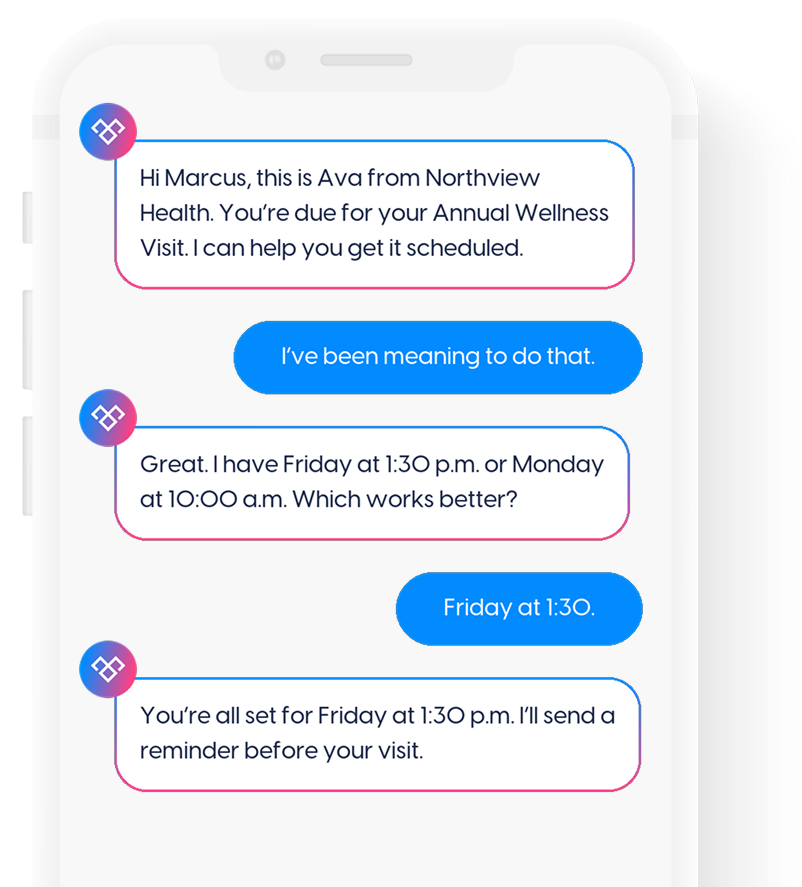
Fill more AWV slots with less manual outreach
Meera helps healthcare teams turn overdue AWV registries into scheduled visits through timely text outreach, guided scheduling, reminders, and care team routing when patients need a human conversation.

 Higher Education
Increase your application rates
Higher Education
Increase your application rates
 Insurance
Automate policy renewals and sales tasks
Insurance
Automate policy renewals and sales tasks
 Contact Centers
Improve your connect rates
Contact Centers
Improve your connect rates
 Financial Services
Sign more loan applications
Financial Services
Sign more loan applications
 Home Services
Increase your appointments set rates
Home Services
Increase your appointments set rates
 Healthcare
Convert more inquiries into appointments
Healthcare
Convert more inquiries into appointments
 Legal
Convert more legal leads into clients
Legal
Convert more legal leads into clients
 Qualify & Nurture Leads
Automate lead follow up and engagement
Qualify & Nurture Leads
Automate lead follow up and engagement
 Transfer Warm Calls to Agents
Connect ready-to-buy leads with agents automatically
Transfer Warm Calls to Agents
Connect ready-to-buy leads with agents automatically
 Manage Events
Provide an easier way for people to register and attend
Manage Events
Provide an easier way for people to register and attend
 Schedule Appointments
Set up meetings and demos with less effort
Schedule Appointments
Set up meetings and demos with less effort
 Operations Automation (Coming soon)
Get notified when our new operations automation platform is ready.
Operations Automation (Coming soon)
Get notified when our new operations automation platform is ready.
.svg) How Meera Works
See how Meera automates tedious sales tasks
How Meera Works
See how Meera automates tedious sales tasks
.svg) Multilingual texting
Meera can text and translate 90+ languages
Multilingual texting
Meera can text and translate 90+ languages
 Inbound Marketing
Scan a QR code or tap a link to open a pre-filled text.
Inbound Marketing
Scan a QR code or tap a link to open a pre-filled text.
.svg) Compliance Control
Keep your messaging compliant — without any guesswork
Compliance Control
Keep your messaging compliant — without any guesswork
 How Meera Is Different
Learn why more businesses are switching to AI text messaging
How Meera Is Different
Learn why more businesses are switching to AI text messaging
.svg) Channels
Learn how Meera uses SMS, Voice, Email, and more to reach leads on the right channel at the right moment.
Channels
Learn how Meera uses SMS, Voice, Email, and more to reach leads on the right channel at the right moment.
.png?width=512&height=512&name=guru%20(1).png) Expert Guidance
Discover how working with a Meera AI expert helps you reach your goals
Expert Guidance
Discover how working with a Meera AI expert helps you reach your goals
.svg) DialogueDesign™
See why Meera is different than any other sales automation platform you've tried.
DialogueDesign™
See why Meera is different than any other sales automation platform you've tried.
 Integrations
Easily integrate Meera with your tech stack
Integrations
Easily integrate Meera with your tech stack
 Five9
Five9
.png?width=199&height=109&name=salesforce-logo1-removebg-preview%20(1).png) Salesforce
Salesforce
 Hubspot
 Zoho
Zoho
 Blog
Helping sales and marketing professionals succeed with automation and AI
Blog
Helping sales and marketing professionals succeed with automation and AI
 Case Studies
Read how our clients are using Meera to win more business.
Case Studies
Read how our clients are using Meera to win more business.
 E-books
Plan a conversational AI strategy that works for your team.
E-books
Plan a conversational AI strategy that works for your team.
 Use Cases
Discover exactly how Meera can help your team.
Use Cases
Discover exactly how Meera can help your team.
 Conversational AI Glossary
Terminology at a Glance
Conversational AI Glossary
Terminology at a Glance
.svg) Build vs Buy
Skip the build. Get qualified conversations faster.
Build vs Buy
Skip the build. Get qualified conversations faster.
 About Us
Who we are, What Meera does, Leadership Team
About Us
Who we are, What Meera does, Leadership Team
.svg) Contact Us
Reach out to the AI experts today
Contact Us
Reach out to the AI experts today
.svg) Press
News and announcements
Press
News and announcements
 Careers
Interested in joining Meera? Explore our job opportunities!
Careers
Interested in joining Meera? Explore our job opportunities!
 Events
Meet our team face to face
Events
Meet our team face to face
.webp?width=716&height=569&name=banner-img%20(1).webp)
THE PROBLEM

Care gap lists keep growing while front-desk teams handle daily calls and appointments.
.svg)
Patients miss calls, overlook portal messages, or wait to schedule until someone makes the next step easy.

Staff spend time working overdue AWV lists instead of helping patients who are ready to book.

High-intent patients remain unscheduled even though the EHR already flagged the visit as due.
1
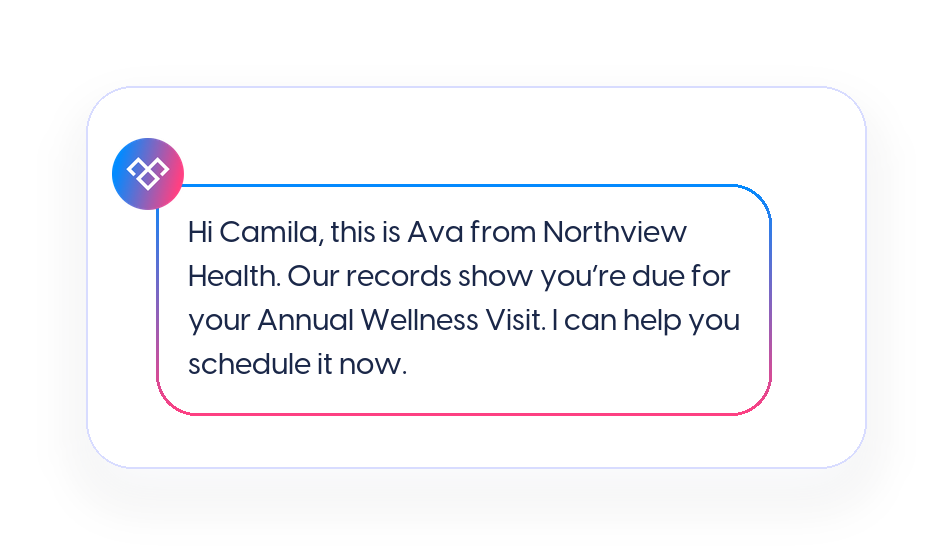
Meera can support outreach from the EHR, care gap registry, quality list, or another approved workflow that identifies patients who are due or overdue for an Annual Wellness Visit.
That means outreach starts from a real care-gap signal, not a generic reminder campaign. The message can reference the visit type, healthcare organization, and next step using approved details.
2
Instead of asking staff to call through the list one patient at a time, Meera starts with a short text that patients can answer when they have a moment.
The first touch keeps the ask simple: confirm interest, offer scheduling help, and give the patient an easy way to respond.
3
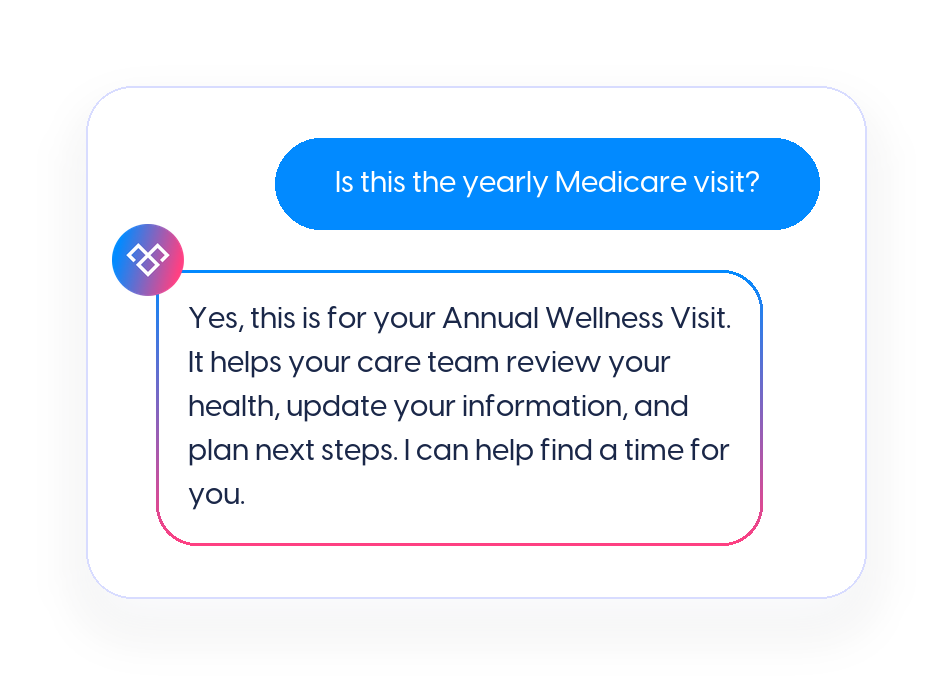
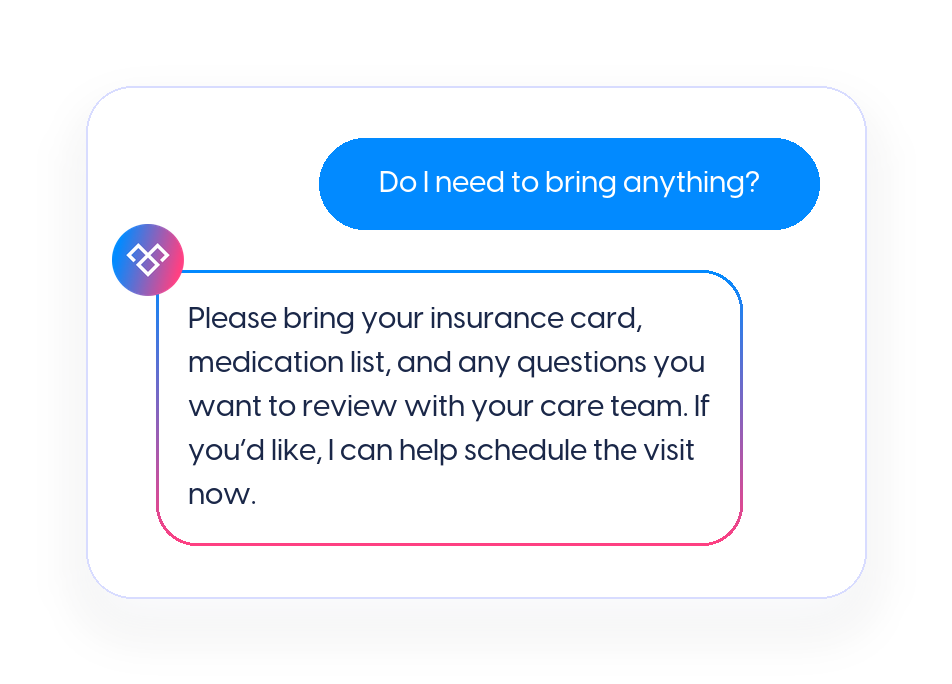
Some patients need basic context before they schedule. They may ask whether the visit is in person, how long it takes, what they should bring, or whether they can speak with someone first.
Meera can use approved details to answer simple logistics and keep the patient moving toward the right next step. If the question needs staff review or patient-specific guidance, Meera can route the conversation instead of trying to resolve it by text.
4
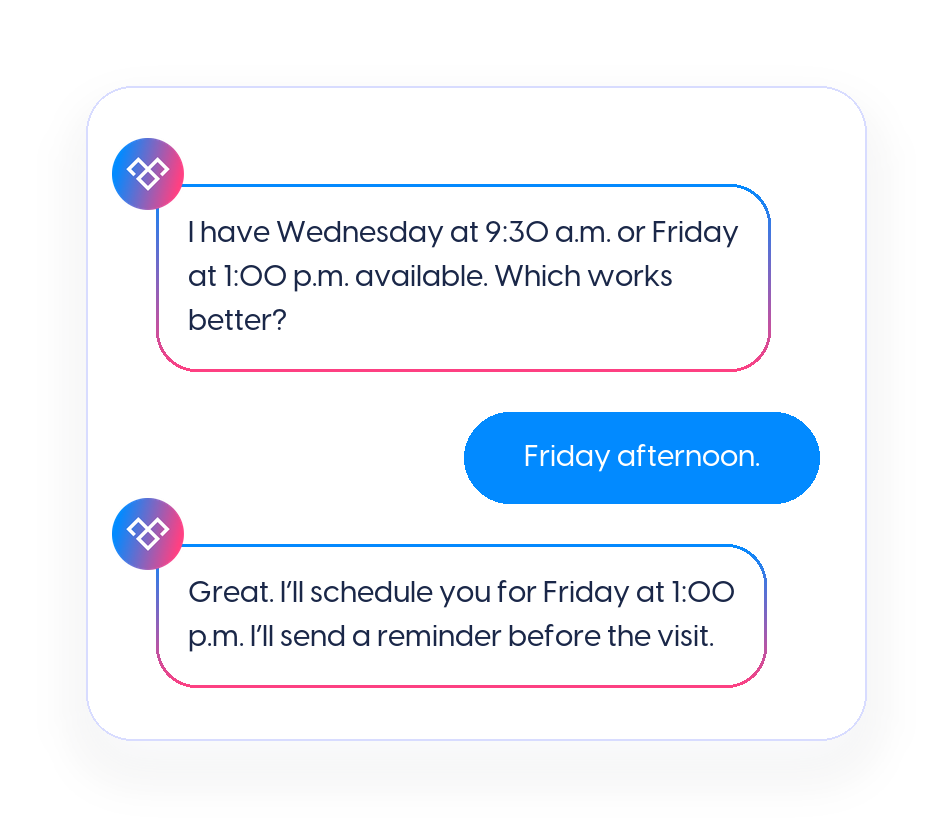
Once the patient is ready, Meera can move directly into scheduling support instead of sending the patient back to a phone line or portal.
Depending on the organization’s workflow, Meera can offer available times, guide the patient into Scheduler, or capture the preferred time window for staff follow-up.
5
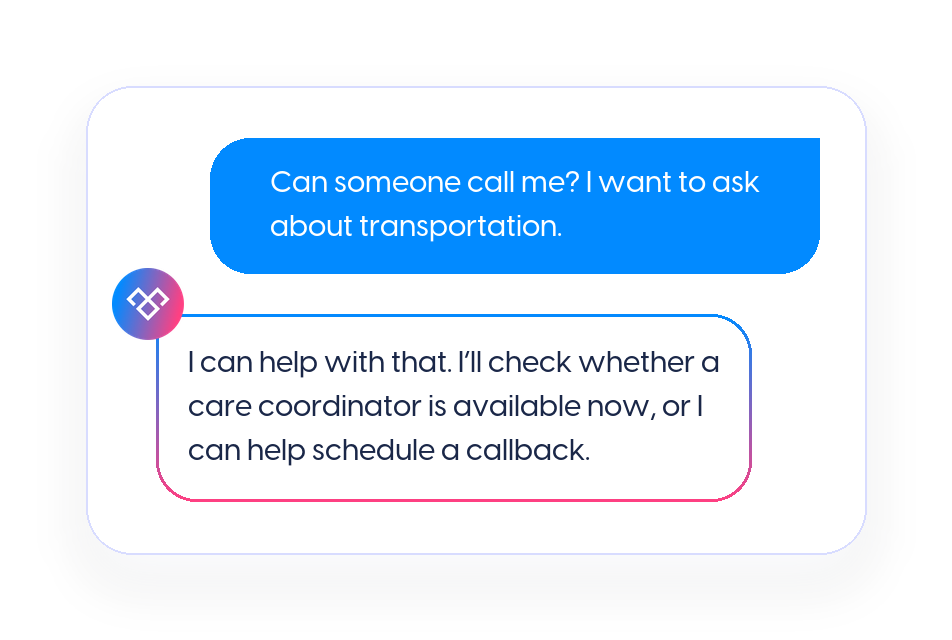
Not every patient can self-schedule from the first text. Some have questions about location, transportation, accessibility, visit type, or what to expect.
When a live conversation is the better path, Meera can support a handoff to a care coordinator where configured. The coordinator gets the patient’s context so the conversation starts from the need the patient already shared.
6
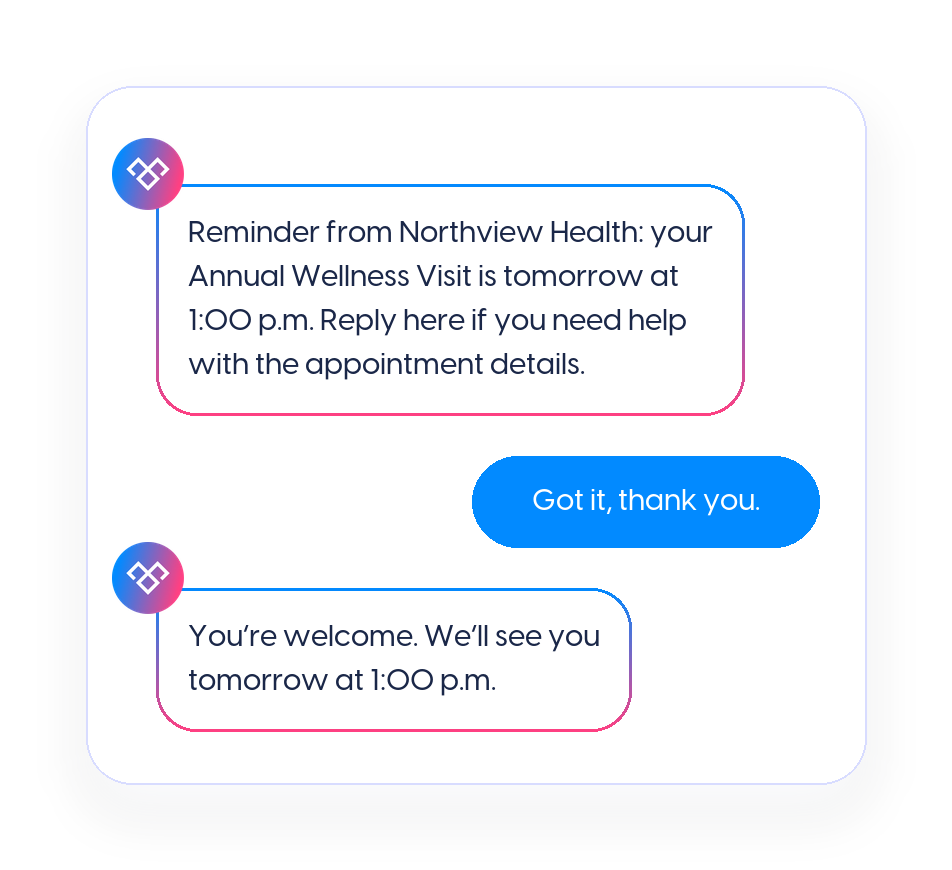
After the AWV is scheduled, Meera can support reminder touches using approved appointment details. That helps keep patients connected between booking the visit and showing up for it.
The reminder path can also give patients a simple way to ask for help if something changes before the appointment.
Annual Wellness Visit outreach depends on timing. Patients may intend to schedule, but calls go unanswered and emails are easy to miss.
.svg)

Scheduling can happen without phone tag

Care teams can focus on patients who need human help
.svg)
Staff do not have to chase every overdue patient by phone
Meera helps healthcare teams turn overdue AWV registries into scheduled visits through timely text outreach, guided scheduling, reminders, and care team routing when patients need a human conversation.