













.svg)
.svg)

.svg)

.svg)
.png?width=512&height=512&name=guru%20(1).png)
.svg)

.png?width=199&height=109&name=salesforce-logo1-removebg-preview%20(1).png)





.svg)

.svg)
.svg)


.webp?width=716&height=569&name=banner-img%20(1).webp)


Conversational AI for Insurance: 7 Use Cases and Benefits
Insurance has always been a high‑touch industry. But the way customers want to engage has changed.
Today, policyholders expect fast responses, personalized guidance, and the ability to communicate on their terms. Most leads never pick up the phone, and emails are ignored. By the time a representative follows up, the opportunity is often gone. Customers increasingly prefer instant, digital interactions.
Salesforce reports that 69% of customers prefer using digital channels, including chat and messaging, because they provide immediate responses. This highlights the real bottleneck, which is not lead volume but the ability to engage those leads effectively.
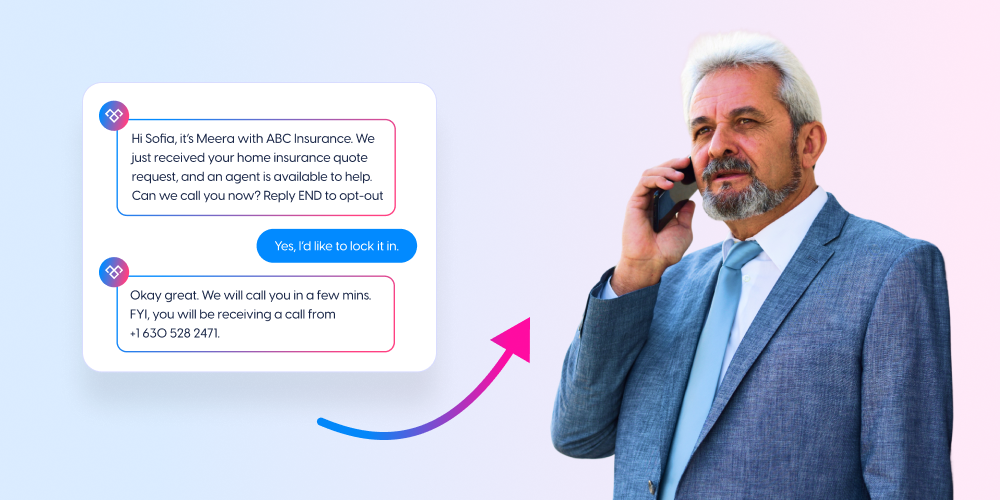
Conversational AI is changing this dynamic. Instead of relying on delayed outreach and manual follow‑ups, insurance companies can start conversations instantly, guide customers through decisions and move them toward real interactions with agents. Platforms like Meera take this further by using AI‑powered text messaging to qualify leads and get them on the phone without the constant chasing.
What Is Conversational AI?
Conversational AI is technology that allows software to communicate with people in natural, human‑like language through text or voice. It combines natural language processing, machine learning and automation to understand intent, respond intelligently and continue conversations over time. In insurance, this most often shows up as SMS conversations, chat interfaces and virtual assistants.
Instead of interrupting customers with calls or sending generic follow‑ups, conversational AI meets people where they already are and engages them in real conversations. These interactions feel timely, relevant and easy to respond to. This shift is especially powerful in insurance, where timing and trust directly impact conversion and retention.
How Conversational AI Improves Insurance Workflows
Insurance companies manage constant communication across the entire customer lifecycle. Leads request quotes, policyholders ask questions, customers file claims, agents follow up on renewals and teams try to re‑engage old leads. The challenge goes beyond simply volume. It is also about timing and consistency.
Leads go cold quickly. Customers expect immediate responses. Agents cannot keep up manually across every interaction. Conversational AI solves this by creating a system where every interaction is handled instantly and consistently. Instead of relying on manual outreach, teams can automate conversations that guide customers toward the next step. For example, a new lead can receive a response within seconds, answer qualification questions and book a call without ever waiting for a representative.
This shift from delayed outreach to real‑time engagement is what drives better conversion, stronger retention and a more seamless customer experience.
Key Benefits of Conversational AI for Insurance Companies
Faster Response Times That Capture Intent
Speed has a direct impact on conversion. When a lead submits a form or requests information, their intent is highest in that moment. Conversational AI ensures every inquiry is answered immediately. For example, a prospect requesting a quote can receive a text within seconds, answer a few questions and move toward booking a call right away. This removes delays that cause leads to disengage. By responding instantly, conversational AI keeps leads engaged and improves conversion rates.
Higher Lead Conversion Without More Headcount
Most insurance teams already generate enough leads. The challenge is getting those leads to respond and engage. Conversational AI improves conversion by starting conversations in a channel customers actually respond to. Instead of relying on repeated calls, it uses text‑based conversations to qualify interest and guide leads forward. This results in more booked calls and higher conversion rates without requiring additional staff.
Reduced Manual Work for Agents
Agents spend a significant portion of their time on repetitive tasks such as follow‑ups, reminders and answering basic questions. Conversational AI automates these interactions. It can handle initial outreach, answer FAQs and follow up automatically, allowing agents to focus on closing deals and handling complex conversations. This improves productivity while reducing burnout and inconsistency.
24/7 Customer Engagement Without Delays
Insurance needs do not follow business hours. Customers may need help at night, on weekends or during peak periods. Conversational AI ensures every inquiry is handled instantly, regardless of timing. Customers can ask questions, start a claim or schedule a call without waiting. This improves responsiveness and increases the likelihood of engagement.
More Personalized and Relevant Interactions
Customers expect communication that feels relevant and tailored to their needs. Conversational AI uses context and data to personalize conversations. For example, it can ask follow‑up questions based on the type of policy a customer is exploring and guide them toward the most relevant option. This creates a better experience and increases trust.
Improved Retention and Renewal Rates
Missed renewal reminders and delayed follow‑ups often lead to policy lapses. Conversational AI solves this by sending proactive reminders and allowing customers to respond instantly. For example, a policyholder can receive a reminder, ask a question and complete renewal steps within the same conversation. This reduces churn and improves retention.
Better Use of Existing Lead Databases
Many insurance companies have large databases of leads that were never fully converted. Conversational AI can re‑engage these leads at scale. It starts new conversations, asks relevant questions and guides them back into the funnel. This turns previously lost opportunities into new revenue without additional marketing spend.
Use Cases for Conversational AI in Insurance
1. Lead Engagement and Qualification
When a new lead comes in, speed determines whether that lead converts. Conversational AI reaches out instantly, asks qualification questions and identifies intent so that agents only spend time on the most relevant prospects.
- Instant outreach: engage leads within seconds so interest is not lost.
- Qualification questions: identify intent and filter out low‑quality leads.
- Guided responses: move qualified leads toward booking a call.
For a deeper breakdown, see our guide on how conversational AI improves lead qualification.
2. Appointment Scheduling and Booking
Getting a lead to commit to a call is one of the biggest friction points in insurance sales. Conversational AI simplifies scheduling by handling the process directly within the conversation.
- Suggesting available time slots: make it easy for leads to choose a time and nudging them to commit.
- Handling scheduling coordination: remove back‑and‑forth friction that can cause drop‑offs.
- Sending confirmations and reminders: reduce no‑shows and missed appointments.
Meera’s appointment scheduling features work like an automated insurance agent. Meera can automatically text new leads, ask what times work best, check agent availability, and handle follow‑ups and reminders.
This means you don’t lose warm leads because of scheduling delays.
3. Automated Follow‑Ups and Lead Nurturing
Most conversions require multiple touchpoints, but manual follow‑ups are inconsistent and time‑consuming. Conversational AI ensures every lead is nurtured consistently without requiring constant effort from your team.
- Timely follow‑ups: re‑engage leads so they do not go cold and keeping the conversation alive.
- Personalized messages: reference prior interactions to maintain context and build trust.
- Ongoing nurturing: guide leads toward the next step over time, whether that is a call, a quote or a renewal.
This creates a more consistent experience and increases conversion rates.
4. Claims Intake and Status Updates
Filing a claim is often stressful and time‑sensitive, making communication critical. Conversational AI can guide customers through the claims process while reducing wait times and improving clarity.
- Guided intake: collect claim details step‑by‑step to streamline first notice of loss (FNOL).
- Document prompts: request required information such as photos or descriptions so nothing is missed.
- Status updates: keep customers informed without requiring calls, reducing anxiety and building trust.
This improves both operational efficiency and customer satisfaction.
5. Policy Questions, Quotes and Coverage Guidance
Customers often need quick answers before making decisions about coverage. Conversational AI can handle common questions and guide customers through options in real time.
- Instant answers: respond to FAQs about policies and coverage so customers don’t wait.
- Quote assistance: help users explore pricing and options, moving them closer to a decision.
- Guided recommendations: direct customers toward the right policy based on their needs and preferences.
This reduces friction and helps customers move forward faster, and is particularly helpful for industries like insurance.
6. Renewal Reminders and Retention Campaigns
Retention depends on consistent and timely communication. Conversational AI ensures policyholders receive reminders and are more likely to stay customers.
- Proactive renewal reminders: identify policyholders nearing renewal and send timely, personalized messages, to keep customers engaged before they start comparing alternatives.
- Context-aware conversations: tools like Meera can tailor the conversation based on each customer’s history, answering questions, addressing concerns, and reinforcing the value of their current coverage.
- Frictionless renewal actions: customers can confirm, update, or ask about their policy directly within the conversation.
By automating renewals and customer engagement at key touchpoints, conversational AI tools increase retention and turn renewals into long-term customer value. Learn how Meera helps automate customer re-enrollments.
7. Warm Call Transfers to Agents
The goal is to start conversations in a way that leads to specific outcomes. Conversational AI can transition qualified leads directly to live agents with full context.
- Seamless handoff: transfer conversations to agents at the right moment so the customer never feels abandoned.
- Context sharing: give agents full visibility into prior interactions so they can pick up without repeating questions.
- Higher‑quality calls: ensure agents speak with qualified prospects who are ready to talk.
See how this works with warm call transfer.
How Insurance Companies Are Turning Conversations Into Conversions
Conversational AI is transforming insurance communication by replacing delayed outreach with real‑time engagement. The impact is clear: faster responses lead to more engagement, better conversations lead to more qualified opportunities and more qualified conversations lead to more closed deals.
Meera is an AI texting platform that starts conversations with leads, qualifies them and gets the right ones on the phone without the constant chasing. Instead of relying on calls and emails that often go unanswered, it uses natural, timely text conversations to guide prospects toward real interactions.
For insurance teams, that means more conversations, more booked calls and less manual work. As customer expectations continue to evolve, the companies that win will be the ones that respond first, engage better and make it easier to connect.
About the Author

Grant Weherley