














.svg)
.svg)

.svg)

.svg)
.png?width=512&height=512&name=guru%20(1).png)
.svg)


.png?width=199&height=109&name=salesforce-logo1-removebg-preview%20(1).png)




.svg)
.svg)


.webp?width=716&height=569&name=banner-img%20(1).webp)


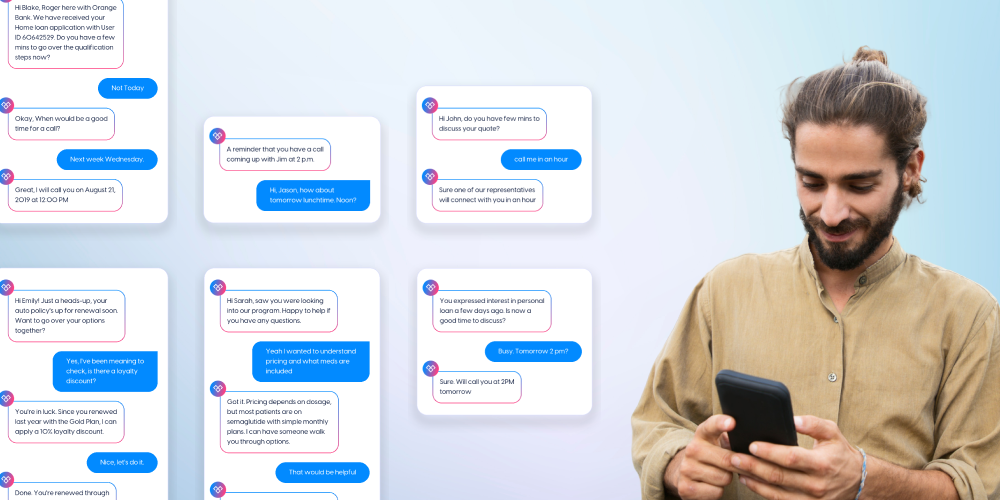
1. Instant lead follow-up in insurance
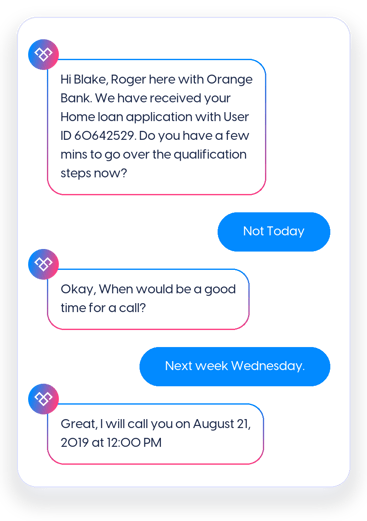
One of the clearest examples of conversational AI in action is inbound lead response. In insurance, speed matters because prospects are often comparing multiple providers at once. If the first response is slow, the opportunity can disappear quickly.
That is why insurance is such a strong fit for conversational AI. With insurance teams, the goal is not just to send a fast reply. It is to engage new leads almost immediately, qualify them through conversation, and move the right prospects toward a live call faster.
This use case matters because it shows conversational AI doing more than answering FAQs. It is actively working the lead, collecting information, and helping agents focus on higher-value conversations.
2. AI appointment setting and scheduling
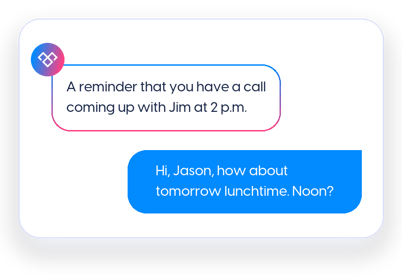
Scheduling is one of the most common places where manual work slows down growth. Sales teams, admissions teams, and service businesses all lose time to back-and-forth emails, missed calls, and rescheduling friction.
That is why appointment scheduling is one of the most practical conversational AI use cases. Instead of relying on manual outreach to lock in a meeting, businesses can automate follow-ups, help leads book while interest is still high, and reduce the drop-off that often happens between first response and confirmed appointment.
For businesses, this is valuable because conversational AI is not just replying to someone. It is helping them take action at the right moment.
3. Warm call transfer for high-intent leads
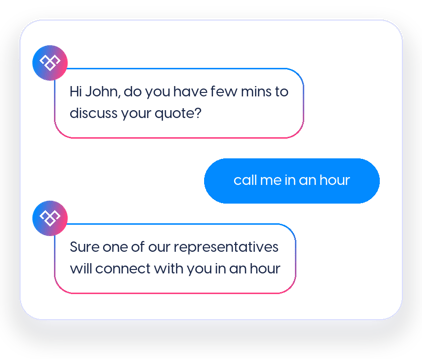
Sometimes the best next step is not another text exchange. It is a live conversation with a real person. But even then, manual handoff often creates friction. A rep may be unavailable, the prospect may stop responding, or the call may never happen.
That is where warm call transfer becomes a powerful conversational AI example. Instead of leaving the lead waiting for the next step, businesses can coordinate reminders, confirm intent, and connect qualified prospects to available agents with less delay.
This use case is important because it shows how conversational AI can improve human connection rather than replace it.
4. Customer support chat on websites and apps
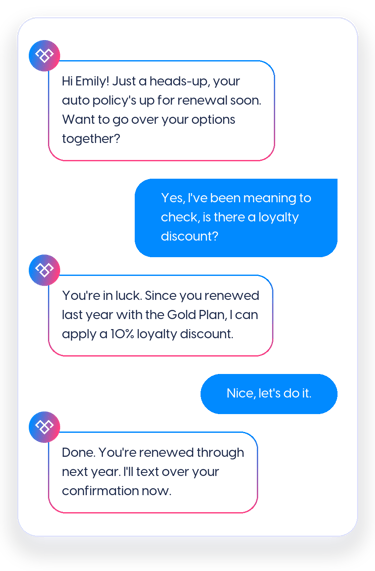
One of the most familiar conversational AI examples is customer support chat. Businesses use conversational AI on websites and in apps to answer routine questions, guide users to the right resources, and reduce pressure on support teams.
This works especially well when customers need quick help with common issues such as order status, account access, billing questions, or product details. Instead of forcing users to wait for an email response or dig through a help center, conversational AI can provide immediate guidance and escalate when needed.
For real businesses, the value here is scale. Support teams can handle more volume while keeping human agents focused on the more complex cases.
5. Lead qualification before a sales rep steps in
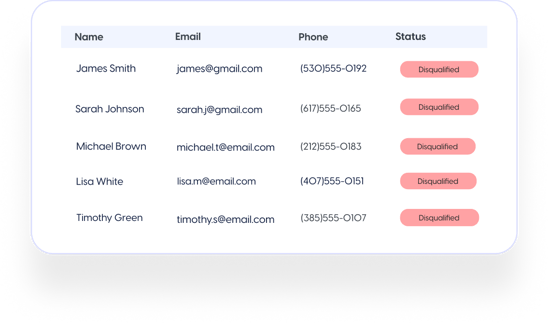
Many businesses waste time because every lead gets treated the same way. Reps end up chasing people who are not ready, not qualified, or not a fit.
Conversational AI helps solve that by asking structured questions early, gathering key details, and routing the right prospects to the right next step. That creates a more efficient process for both the business and the lead.
This matters because better lead qualification improves both speed and focus. Instead of spending time sorting through noise, teams can engage qualified leads faster and more consistently.
6. After-hours inquiry handling
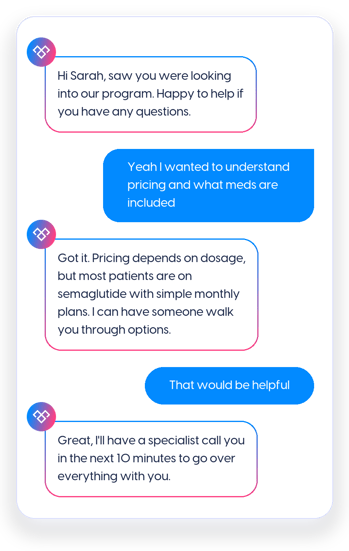
A lot of customer interest happens outside business hours. Prospects browse at night, submit forms on weekends, and reply to marketing messages when your team is unavailable.
Conversational AI helps businesses keep that demand warm. Instead of letting those leads sit untouched until the next morning, businesses can respond right away, continue the conversation, and keep momentum alive until a human is ready to step in.
This is especially useful in industries where response time strongly affects close rates, such as insurance, mortgage, higher education, and local services.
7. Contact center assistance and live routing
Conversational AI is also being used inside contact centers, not just on websites. Businesses use it to handle routine requests, gather context before a handoff, and route customers to the right team faster.
This improves both efficiency and service quality. Customers spend less time repeating themselves, and human agents can start from a better-informed position. For contact centers handling high volumes, that can make a measurable difference in both wait times and customer experience.
8. Banking and financial service interactions
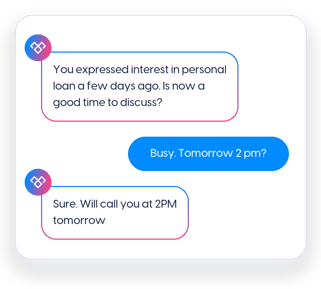
Banking is another strong conversational AI use case because customers often need quick answers, guided workflows, and support across common tasks.
For businesses in finance, conversational AI can help with service navigation, onboarding, account-related questions, and other guided interactions where speed and clarity matter. Not every request needs a human agent immediately, but customers still expect a fast and helpful experience.
That is why conversational AI works well in financial services. It helps deliver guided support without adding friction.
9. Sales coaching and internal sales enablement
Conversational AI is not only customer-facing. It can also support internal teams by analyzing conversations, surfacing patterns, and helping managers coach more effectively.
For businesses, this is a useful reminder that conversational AI is not just a front-end chatbot. It can also become part of how teams learn from real interactions, identify friction in the sales process, and improve performance over time.
That broader use case is important because it shows conversational AI creating value behind the scenes as well as in customer-facing workflows.
10. Website guidance across the buyer journey
Some of the most effective conversational AI deployments are not tied to one narrow task. Instead, they support the buyer journey across pre-sale, purchase, and post-sale moments.
For example, conversational AI can help visitors find the right product, answer common questions before purchase, collect contact details, and support customers after the sale. Rather than treating every conversation as a support request, businesses can use conversational AI to guide users toward the right next step at different stages of the journey.
This makes the technology more useful and more commercially relevant. It is not just there to answer. It is there to move people forward.
11. Customer service at scale with escalation to humans
A good conversational AI system should not try to do everything. One of the most valuable business uses is handling routine requests while knowing when to escalate.
That balance matters. Customers want speed, but they also want to reach a real person when the issue becomes more complex, sensitive, or time-critical. Conversational AI works best when it removes repetitive work without blocking access to human support.
For real businesses, this is what effective automation looks like. The AI handles the repetitive work, and the human takes over when judgment, empathy, or complexity are required.
12. Mortgage and other high-touch service workflows
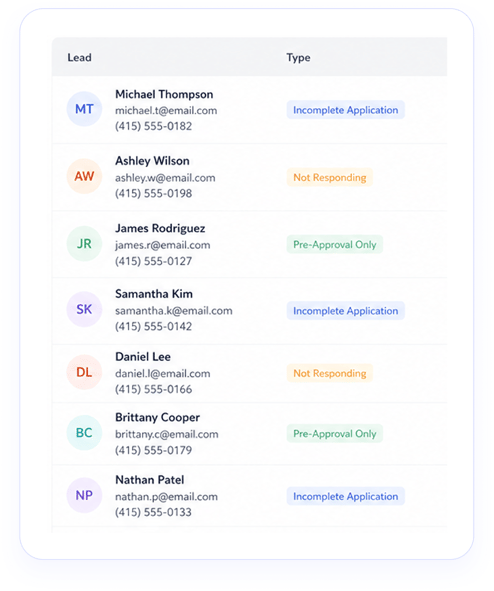
Conversational AI is especially useful in industries where customers have questions, documents, deadlines, and multiple follow-up steps. Mortgage is a strong example because leads often need reminders, status updates, and guidance before they are ready to move forward.
This kind of workflow benefits from consistent communication, fast responses, and fewer manual gaps. Conversational AI can help businesses keep prospects engaged, collect needed information, and make it easier for human teams to step in at the right moment.
Once the mortgage page is live, this section will be a natural place to add that internal link.
What these conversational AI examples have in common
These examples come from different industries and workflows, but they share the same pattern.
First, conversational AI works best when it is connected to a real business process, not used as a novelty.
Second, the strongest use cases involve movement. The system does not just answer a question. It qualifies, schedules, routes, reminds, transfers, or supports a next action.
Third, the best implementations still leave room for humans. AI handles the repetitive and time-sensitive parts, while people focus on higher-value interactions.
That distinction matters. A basic chatbot may reduce some support volume, but a stronger conversational AI system can directly improve conversion, service speed, and operational efficiency.
Why Meera belongs first on this list
There are many conversational AI examples in the market, but the most valuable ones are tied directly to revenue-critical workflows. That is why Meera belongs first on this list.
At Meera, the focus is not just on passive customer support. It is on the moments where businesses often lose momentum: lead engagement, follow-up, appointment setting, and warm transfer. Those are the points where faster, more consistent conversations can make a measurable difference.
That is also why conversational AI is most effective when it is built into the flow of real business operations. When it helps teams respond faster, qualify better, schedule sooner, and connect prospects to humans at the right time, it becomes much more than a messaging tool.
Final thoughts
Conversational AI is now being used in far more places than most businesses realize. It supports customer service, lead qualification, appointment setting, contact center routing, financial services, after-hours engagement, and internal team performance. The best examples are not the flashiest ones. They are the ones that remove friction from real workflows.
For businesses exploring this space, the smartest place to start is with one practical question: where are conversations getting stuck today? Once that is clear, conversational AI becomes much easier to evaluate.
And when the goal is to engage leads faster, qualify them more effectively, schedule the next step, and hand off to human teams without delay, conversational AI becomes a practical advantage rather than just a trend.
About the Author
